China-Russia Oil Trade Surges as Energy Ties Redraw Global Flow Patterns
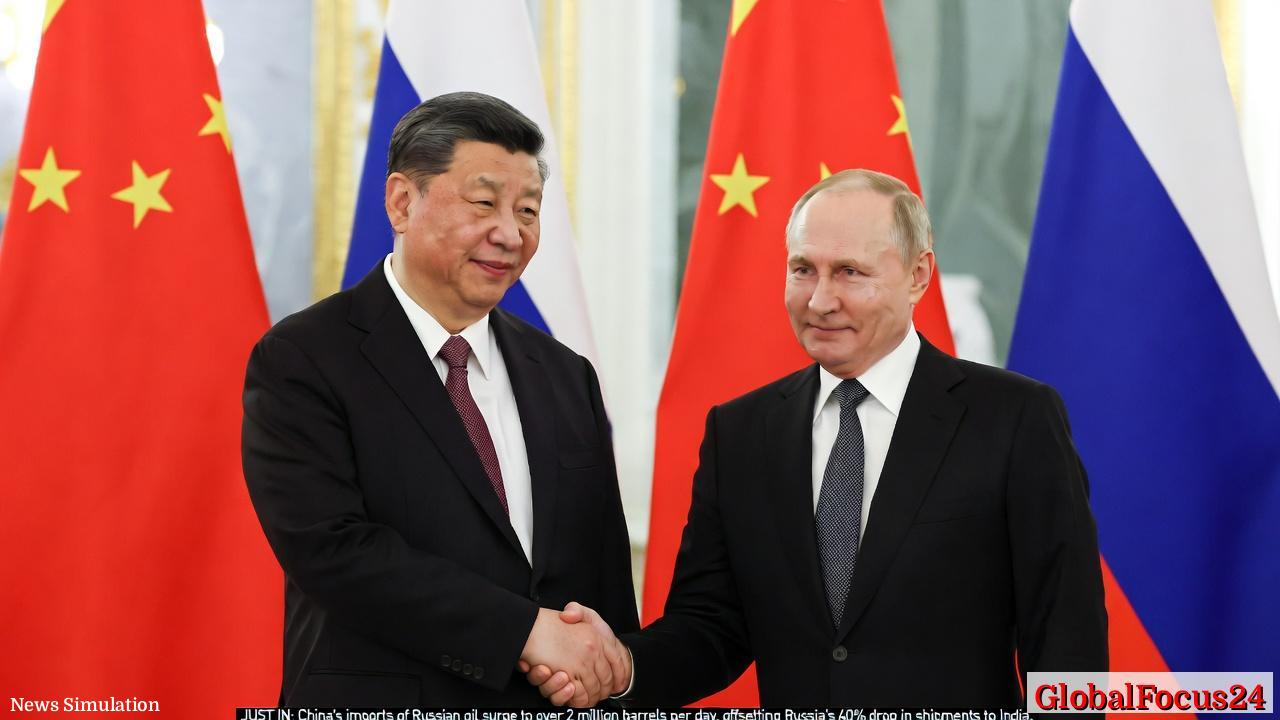
In a striking shift in the global energy landscape, China's imports of Russian crude have surged to more than 2 million barrels per day, underpinning a widening energy partnership between Beijing and Moscow even as Western markets reconfigure around shifting geopolitical dynamics. The trend comes as Russia’s shipments to India have declined by roughly 40 percent in the same period, highlighting alternating routes and strategic choices shaping today’s international oil flows. Together, these movements illuminate how buyers in Asia are recalibrating supplier portfolios, logistics networks, and contract terms in response to price signals, sanctions regimes, and domestic energy security priorities.
Historical context: a long arc of an evolving energy alliance
The rapid expansion of Chinese imports from Russia did not happen in a vacuum. The two countries have cultivated a broad-based energy partnership for more than a decade, anchored by long-term supply contracts, infrastructure investments, and a preference for ruble-denominated or barter-style arrangements in some deals. Russia, facing Western sanctions and evolving access to traditional financial channels, has leveraged its vast resource base and energy-export infrastructure to deepen economic ties with large, energy-hungry markets in Asia. China, for its part, has pursued diversified sourcing to stabilize fuel costs, secure reliable energy supplies for its manufacturing and mobility sectors, and reduce exposure to any single supplier.
From the start of the 2010s, Russia’s oil and gas exports to Asia grew progressively as pipeline capacity and freight routes expanded. In recent years, China emerged as a principal buyer of Urals-grade crude and other Russian blends, supported by robust refining capacity across eastern and northeastern coastal provinces. This historical layering—steady increases in volumes, evolving shipping routes, and a mix of term contracts and spot purchases—set the stage for today’s more pronounced shift in trade patterns.
Economic impact: how higher Russian volumes to China affect markets and investment
- Price and pricing dynamics: A sustained influx of Russian crude to China influences global price signals by increasing available supply on the Asia-Pacific market. While the precise price differentials depend on grade, delivery window, and quality adjustments, a higher volume from Russia to China tends to press regional benchmarks downward in the near term, especially if it coincides with softer demand or seasonal maintenance cycles. Over time, this can contribute to more stable feedstock costs for Chinese refiners and downstream industries, potentially supporting broader manufacturing and consumer price stability.
- Refining and regional demand: China’s refining sector is highly integrated with a wide range of crude varieties. The arrival of Russian grades, including lower-sulfur blends and efficient sour crudes, provides refiners with flexible configuration options. This can optimize refinery runs, improve utilization rates, and support competitive pricing for downstream products such as diesel, gasoline, and other fuels that influence both domestic transport costs and export competitiveness.
- Investment and infrastructure signals: The intensification of energy trade often accompanies broader economic cooperation, including infrastructure and financial arrangements that bypass traditional Western-dominant channels. Russian crudes flowing to China may spur further development of port facilities, storage capacity, and cross-border logistics, as well as potential currency-denominated payment arrangements or local settlement mechanisms that enhance resilience against external sanctions shocks.
- Macroeconomic spillovers: For Russia, sustained oil exports to China contribute to trade balance improvements and revenue stability, even amid price volatility. For China, sourcing from Russia supports energy security and diversification of suppliers, which can help dampen the upward pressure on domestic energy costs during periods of global supply tightness. The net effect in the broader region includes a firmer energy corridor between Eurasian economies, reinforcing multipolar trade channels.
Regional comparisons: how other major buyers are rebalancing
- India: The 40 percent decline in Russia-bound shipments to India during the same period highlights a contrasting approach among major Asian buyers. India has been diversifying suppliers, increasing purchases from the Middle East, Africa, and the Americas, while also pursuing domestic refinement capacity expansion and strategic storage. The shift reduces exposure to sanctions-related risk and price volatility associated with any single supplier while maintaining energy security for a growing economy with rising fuel demand.
- Southeast Asia: Several regional refiners in Southeast Asia are recalibrating their sourcing mix to balance cost, reliability, and supply security. As several regional markets look to diversify away from dependence on any single superpower, Russian crude remains a potential option, particularly for blends that align with refinery configurations in place or under planned upgrades. Trade flows in this corridor are influenced by shipping costs, port capacities, and bilateral agreements with producer nations.
- Europe: In Europe, energy buyers have been retooling imports in response to sanctions pressures, price swings, and a push toward decarbonization. While European demand remains a factor in global oil pricing, the Asia-centric shift in Russian exports presents a global reallocation of flows that interacts with Europe’s own energy strategy, refining margins, and storage dynamics. The net effect across regions is an intricate mosaic of supply routes and risk management practices adopted by national oil companies and independent traders.
Logistical and strategic considerations: navigating the new normal
- Freight routes and transit times: The Asia-to-Russia energy corridor benefits from well-established freight corridors and robust rail and maritime connections, enabling relatively predictable delivery schedules. The reliability of these routes is crucial for Chinese refiners that plan production cycles around feedstock availability and price signals.
- Quality and compatibility: Russian crudes come in a range of grades, each with distinct sulfur content, viscosity, and refinery compatibility. Refineries in eastern China, which are designed to handle different crude profiles, must manage blending strategies and processing units to optimize yields and meet environmental and performance standards. The ability to adapt to varying grades enhances resilience in the face of global supply disruptions.
- Sanctions risk and financial channels: The geopolitical environment continues to shape how oil is traded globally. While Russia’s energy exports have remained a critical lever for national revenue, the execution of cross-border payments, sanctions compliance, and risk management remain central to the feasibility of large-volume contracts. Banks, insurers, and logistics providers all play key roles in ensuring smooth transactions while mitigating counterparty risk.
Public reaction and energy policy considerations
Public sentiment toward shifting energy flows often reflects a mix of national priorities, price perceptions, and concerns about energy security. In China, the growing reliance on Russian crude is often framed within a broader strategy to secure steady energy supplies for a rapidly expanding economy. For Russia, the elevated demand from a large buyer like China reinforces economic resilience amid sanctions pressures and provides a counterbalance to Western market constraints. Observers watching the energy landscape may cite the partnerships as demonstrations of how interdependence among major economies can reshape trade patterns even in a volatile geopolitical environment.
Implications for regional energy security and the broader economy
The intensification of Chinese imports from Russia has several layered implications:
- Energy security: For China, a diversified import portfolio that includes Russian crude contributes to supply stability in the face of global market fluctuations. The ability to access multiple basins and blend options helps cushion domestic energy markets against shocks and supports consistent industrial output.
- Economic resilience: A steady stream of Russian crude into Chinese refineries can bolster industrial activity and export competitiveness, particularly for downstream products such as fuels, petrochemicals, and materials used in manufacturing and infrastructure development. This robustness is especially valuable for regions undergoing rapid urbanization and manufacturing expansion.
- Geopolitical signaling: The growing energy partnership serves as a tangible signal of a multipolar energy order in which major economies collaborate across borders to secure strategic resources. While not a direct political alignment, such energy ties carry geopolitical weight, reinforcing the practical reality that economics and energy security often shape diplomatic posture and regional influence.
Outlook: continued evolution amid global realignments
As markets absorb the implications of rising China-Russia crude trade, several factors will likely guide the trajectory in the coming quarters:
- Price dynamics and demand: global oil prices will respond to a combination of supply adjustments, seasonal demand, and macroeconomic conditions. If Chinese demand remains robust and Russian exports maintain steady volumes, global benchmarks could reflect a more balanced supply backdrop, contributing to greater predictability for refiners and traders.
- Infrastructure and capacity: Ongoing investments in storage, loading facilities, and cross-border logistics in both countries will influence the efficiency and cost of trade. Any enhancements that lower transportation costs or improve delivery reliability will make the corridor more attractive to other suppliers and buyers seeking similar diversification.
- Policy and sanctions evolution: Developments in sanctions regimes and international trade policies will continue to shape transactional feasibility and risk management. Market participants will monitor regulatory changes, financial settlement arrangements, and compliance frameworks as they navigate the evolving landscape.
- Regional competing flows: The India-Asia corridor’s evolution, as well as burgeoning trade routes linking the Middle East, Africa, and the Americas with Asia, will create a dynamic global mosaic. Buyers and refiners will assess opportunities to optimize blending strategies, storage permissions, and supply contracts to maximize value.
Conclusion: a defining moment in 21st-century energy trade
The rise in Chinese imports of Russian oil to above 2 million barrels per day marks a notable inflection in the global energy narrative. It underscores a shift toward more diversified, regionally balanced energy networks as major economies recalibrate their supplier bases in response to sanctions, price volatility, and the imperative of reliable energy access. The India-Russia trade decline and the broader reorientation of flows among Asia, Europe, and the Americas illustrate how oil markets are increasingly shaped by strategic partnerships and regional priorities rather than a single dominant source. As markets adapt, the enduring question for policymakers, industry players, and consumers remains: how will these evolving patterns influence price signals, energy security, and industrial competitiveness in a fast-changing global economy?