California’s CARE Court: A Critical Look at a High-Profile Mental Health Initiative
In 2022, California launched CARE Court, a bold program designed to connect individuals with severe mental illness who cycle between homelessness and incarceration with treatment options through court-ordered plans. The program, backed by a $236 million investment, set out with ambitious goals: to streamline access to mental health services, reduce repeat arrests, and stabilize lives by moving vulnerable residents from the streets into structured treatment. Four years later, the program’s progress has become a focal point of debate and scrutiny. Official findings show a stark gap between early projections and real-world outcomes, fueling discussions about program design, resource allocation, and the best path to meaningful public safety and public health results.
Historical context: California’s evolving mental health strategy
California’s approach to homelessness and mental illness has long blended public health, social services, and criminal justice elements. The state has repeatedly sought to balance rights, care, and community safety, often with funding that follows legislative and administrative iterations. CARE Court emerged within this broader history as a specialized mechanism intended to address persistent, high-need cases by formalizing treatment engagement through the court system. Prior efforts—ranging from crisis intervention protocols to conservatorship models—illustrate California’s ongoing struggle to translate policy promises into durable on-the-ground benefits. CARE Court’s design followed a logic familiar in public policy: identify a high-need population, remove barriers to treatment, and coordinate services across multiple agencies to produce better outcomes. The ambition was substantial: by some estimates up to 12,000 people could receive court-ordered treatment, offering a scalable solution to entrenched homelessness and crime cycles linked to untreated mental illness.
Economic impact: costs, allocations, and opportunity questions
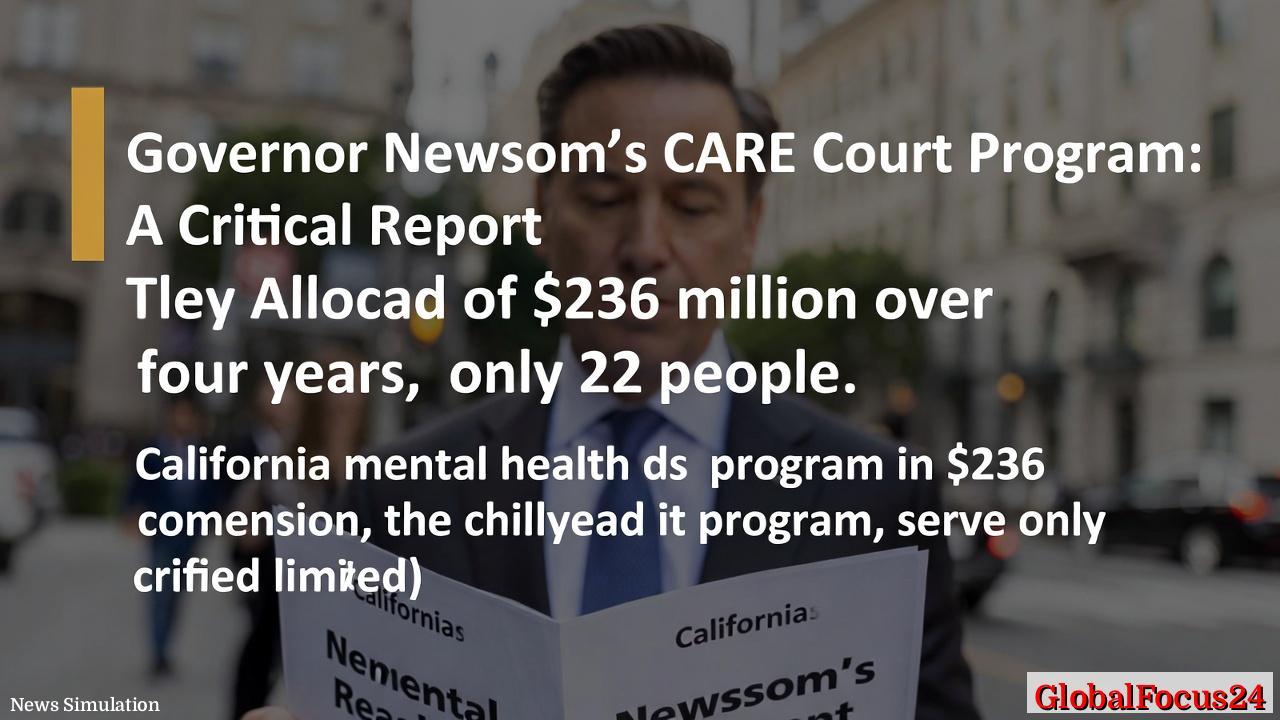
The CARE Court program carries a substantial price tag, reflecting its comprehensive scope. The $236 million allocation covers court operations, case management, housing supports, and clinical treatment services intended to be delivered at scale. Yet recent analyses indicate a pronounced underutilization of the program’s potential. Reports show that only 22 individuals had received court-ordered treatment since inception, despite the possibility that as many as 50,000 could qualify. With approximately 3,000 petitions filed statewide by October, just 706 petitions were approved, and a large share of these approvals—684—amounted to voluntary arrangements that did not align with the program’s central objective of court-ordered treatment. This discrepancy raises questions about how the program was designed, implemented, and communicated to stakeholders, particularly families hoping for decisive intervention.
From an economic standpoint, the key questions center on cost-per-beneficiary, opportunity costs, and long-term fiscal impacts. If a program aims to reduce emergency room visits, police encounters, and housing instability, measurable cost savings may accrue only after sustained engagement and stable housing. Critics argue that if a relatively small number of people receive meaningful treatment through a costly process, the opportunity cost of resources allocated to administrative functions and court proceedings may not be optimal. Proponents, including supporters within government and public health sectors, contend that CARE Court’s framework creates leverage—an accountability structure that can mobilize services and track progress more effectively than voluntary, fragmented efforts. The true economic impact, however, will depend on longer-term outcomes: reduced recidivism, improved health metrics, and durable housing stability, all of which affect public budgets and local economies.
Regional comparisons: how CARE Court fits into broader national trends
California is not alone in facing the challenge of aligning mental health treatment with homelessness and public safety. Several other states have experimented with court-supervised treatment or court-centered response models, each with its own design nuances and success metrics. In some cases, programs that emphasize voluntary engagement and community-based supports have achieved higher participation rates, while other models leverage assertive outreach and coercive elements to secure treatment participation. In comparing regional approaches, California’s CARE Court stands out for its explicit court-ordered structure aimed at mandating treatment in the most challenging cases. Critics argue that the model may be overly reliant on judicial processes, potentially creating bottlenecks and limiting timely access to care. Supporters point to the potential for stronger accountability and clearer pathways to services, especially when paired with housing and social supports. The national landscape suggests that mixed strategies—combining contingency management, integrated housing with health care, and robust case management—tend to yield the strongest outcomes over time. California’s experience underscores the importance of alignment among courts, health systems, housing providers, and community organizations to translate policy intent into measurable results.
Personal stories and public reaction: the human dimension
Behind the statistics are individuals and families whose lives intersect with this program in tangible ways. One Concord parent, seeking help for a son with schizophrenia, experienced heartbreak when a petition to compel treatment was denied, leaving a young man vulnerable on the streets and at risk of recurring cycles of arrest and crisis. These stories highlight the emotional stakes: families seeking intervention, patients seeking stability, and communities seeking safety. Public reaction has been a mix of cautious optimism and growing frustration. Supporters emphasize that any program aiming to reduce suffering and danger deserves continued refinement and funding, while opponents question the efficiency and equity of a process that appears to deliver limited court-ordered outcomes relative to its budget. The discourse around CARE Court reflects broader societal tensions: how to balance individual autonomy with collective welfare, and how to ensure that complex, long-term needs receive sustained attention in a political environment that often prioritizes near-term results.
Policy efficiency and program design: lessons moving forward
Several design and implementation factors stand out in evaluating CARE Court’s four-year arc:
- Eligibility and screening: The potential pool of eligible individuals is large, but actual intake hinges on screening protocols, legal standards, and cross-agency coordination. A gap between predicted eligibility and actual participation can dilute a program’s perceived impact.
- Court processes vs. voluntary engagement: The program’s effectiveness may hinge on the efficiency of court proceedings and the availability of voluntary pathways to care. The prevalence of voluntary agreements among approved petitions suggests that families and individuals may opt for less coercive routes, which can reduce the system’s ability to mandate treatment but may improve voluntary engagement and trust.
- Housing and service integration: Successful treatment often requires stable housing, access to medications, case management, and coordinated health services. Without robust housing options and integrated care, treatment plans can falter, diminishing long-term outcomes.
- Data transparency and outcome metrics: Ongoing evaluation with clear, transparent metrics is essential. Key indicators might include hospitalization rates, incarceration rates, homelessness duration, symptom management, and quality-of-life measures. Early signals are valuable, but longer-term data are needed to assess true impact.
- Stakeholder alignment: The collaboration among courts, health agencies, housing authorities, and community-based organizations is critical. Misalignments in funding streams, eligibility criteria, or service capacity can create friction and slow progress.
What this means for ongoing public policy
As policymakers reassess CARE Court, several actionable considerations emerge:
- Refine eligibility criteria with patient-centered criteria that prioritize safety and stabilization while safeguarding civil liberties.
- Strengthen housing-first approaches alongside treatment to address the root causes of homelessness and ensure that treatment is sustainable beyond the court’s oversight.
- Increase community-based supports and out-patient services to shorten wait times and reduce courthouse bottlenecks, enabling more rapid engagement for eligible individuals.
- Improve data collection and reporting to track progress transparently, including disaggregated outcomes by demographic groups and geography, to identify gaps and inform targeted interventions.
- Communicate clearly with families and communities about expectations, processes, and available supports to reduce confusion and frustration.
Regional implications and future outlook
California’s challenge extends beyond a single program. If CARE Court can be recalibrated to deliver timely access to services and measurable improvements in safety and well-being, it may serve as a model for the nation’s broader public health and criminal justice strategies. Conversely, if the program remains relatively underutilized or bureaucratically burdensome, lawmakers may pivot toward alternative approaches that emphasize rapid access to housing, integrated health care, and voluntary treatment. The state’s urban centers, with dense populations and higher concentrations of homelessness, often stand at the forefront of both the program’s challenges and its potential benefits. Rural counties, by contrast, may encounter different logistical constraints but share the need for streamlined access to care and stable housing.
Economic and social expectations going forward hinge on delivering tangible improvements in daily life for vulnerable residents. A successful CARE Court iteration would ideally demonstrate meaningful reductions in homelessness, fewer repeated crises, and improved health outcomes, all while maintaining respect for individual rights and clinical best practices. The conversation surrounding CARE Court reflects a broader question about how society allocates scarce resources to support people with complex needs: is the right approach one that compels action through legal frameworks, or one that emphasizes voluntary engagement backed by robust community supports?
Conclusion: assessing progress with nuance and patience
CARE Court represents a significant public policy experiment at the intersection of health care, housing, and the justice system. Four years into its deployment, the program’s early numbers show a modest level of court-ordered commitment relative to initial projections, prompting critical questions about efficiency, design, and impact. At the same time, the broader context of rising homelessness, growing mental health needs, and the imperative to reduce criminal justice involvement for vulnerable populations remains pressing. The next phase for CARE Court is likely to require a recalibration of expectations, a reassertion of core objectives, and a reinforced commitment to integrating housing and health services with judicial oversight in a way that respects patient autonomy while delivering measurable public benefits. As California continues to refine this approach, the lessons learned will undoubtedly inform discussions about how best to address severe mental illness, homelessness, and constraint in a complex urban ecosystem.
Follow regional data and program updates to understand how reforms shift outcomes in the near term. Public interest will hinge on transparent reporting, compassionate care, and practical pathways that translate policy into steadier lives on the ground. The ultimate measure of CARE Court’s success will be whether the initiative helps people regain stability, health, and dignity—while strengthening communities through safer, more humane policies that reflect both compassion and accountability.