Canada‑US Military Simulations Highlight Rapid US Advantage Across Borders
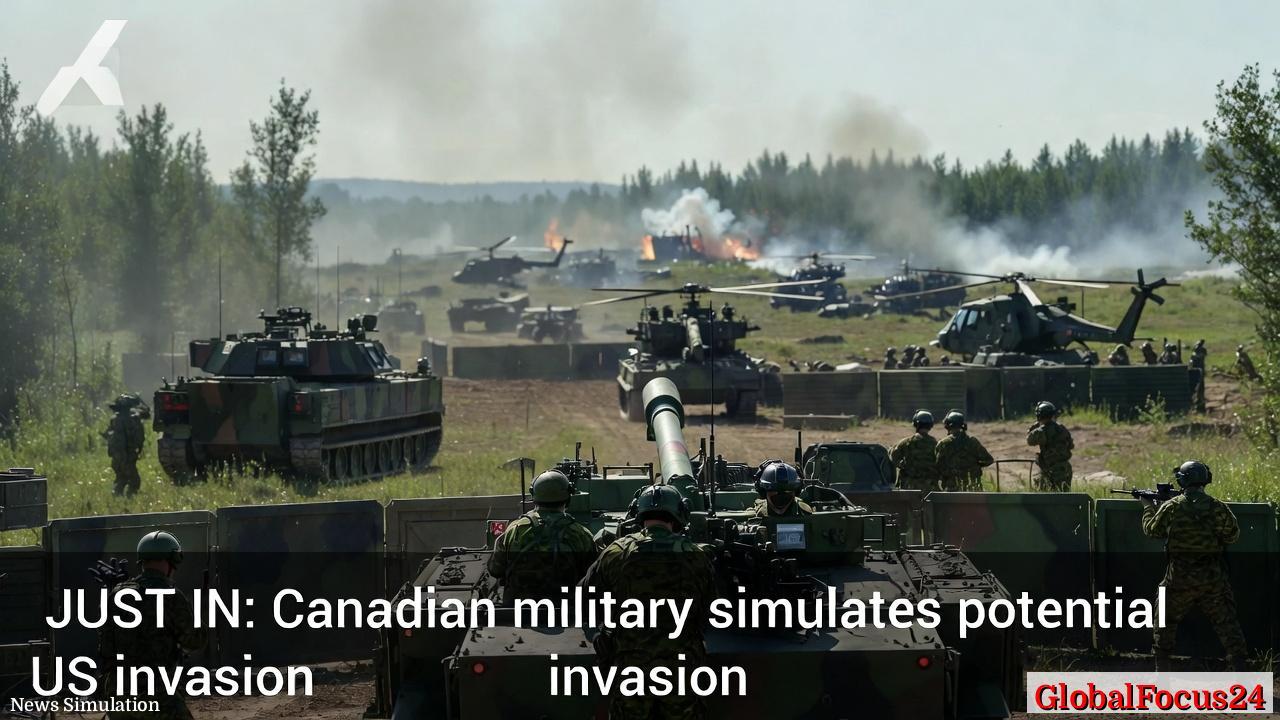
In a series of high‑fidelity defense exercises conducted over the past year, Canadian military planners explored a hypothetical scenario in which American forces undertake a rapid, cross‑border invasion. The simulations, designed to test readiness and response options, concluded that U.S. troops would likely overpower Canadian land and sea defenses within days under certain assumptions. The exercises, which focused on rapid advances across shared borders and coastal approaches, have become a focal point in ongoing defense planning amid broader North American security considerations.
Historical context and strategic framing
The relationship between Canada and the United States rests on a long history of cooperation, trade, and security collaboration. Yet the terrain of defense planning is never static. The simulations build on decades of contingency exercises that assess how neighboring states might react to abrupt shifts in force posture, technological sophistication, and logistical tempo. By modeling a scenario of swift U.S. entry into Canadian territory, planners sought to quantify potential vulnerabilities, stress test command and control structures, and identify gaps in readiness that could influence decision timelines and political choices.
Experts note that such exercises are not predictions but tools for resilience. They allow defenders to map out chokepoints, assess interagency coordination, and experiment with alternative disablement and deterrence options without exposing real populations to risk. The resulting data helps shape modernization programs, alliance‑level coordination, and regional preparedness plans that can be mobilized should tensions rise or deterrence fail. In that sense, the simulations are part of a broader, precautionary framework aimed at preserving stable security dynamics across North America.
Economic implications of regional defense dynamics
An invasion‑style scenario, even in simulation, carries broad economic reverberations. Cross‑border security postures influence trade logistics, energy markets, and regional investment patterns. The simulations underscore the importance of maintaining robust defensive capabilities in a country that relies on the United States for a substantial portion of its trade infrastructure, supply chains, and critical infrastructure resilience. Efficient, integrated defense planning helps minimize downtime and preserves market confidence for manufacturers, exporters, and service sectors that depend on a stable continental security environment.
From a regional economic perspective, the exercise outcomes reinforce the value of infrastructure like ports, transport corridors, and energy facilities that can be protected in a high‑tempo conflict environment. The ability to integrate civilian and military logistics—without compromising civilian access and commerce—can influence the cost and speed of any rapid response. Policymakers and business leaders often scrutinize such exercises for insights into risk management, insurance costs, and contingency planning that impact regional competitiveness and employment trends across provinces and states.
Regional comparisons and lessons learned
Canada’s geographic and logistical profile presents both strengths and vulnerabilities in any rapid‑action defense scenario. The country’s vast coastlines, challenging terrain, and dispersed population centers demand a distributed defense posture, supported by integrated naval, air, and land forces. By contrast, the United States benefits from deeper defense budgets, a larger industrial base, and multi‑domain command and control capabilities that can sustain high operational tempo over extended periods. The simulations highlight these asymmetries in a controlled environment while providing practical recommendations to narrow gaps and improve readiness.
One key takeaway often emphasized in Canadian defense planning is the importance of early warning, robust reconnaissance, and secure communications to prevent surprise incursions. Another is the value of joint exercises with allied partners that can simulate the complexity of cross‑border operations, including coastal defense, airborne mobility, and rapid sealift. The regional comparison also draws attention to the critical role of border infrastructure resilience—the arteries that keep commerce flowing even during heightened threat conditions. Strengthening these corridors through redundancy, cyber‑hardening, and coordinated civilian‑military response protocols can help reduce the speed and effectiveness of any potential disruption.
Operational implications for defense modernization
The exercises underscore ongoing modernization priorities across Canada’s armed forces. Investments in mobility, precision fires, maritime patrol capabilities, and advanced surveillance systems are consistently cited as essential components of a more integrated defense posture. Capability gaps identified in simulations often translate into targeted procurement programs, alongside reforms to training, doctrine, and inter‑agency collaboration with provincial and municipal authorities. The emphasis on rapid decision‑making and scalable response options aligns with broader modernization trajectories aimed at improving resilience without sacrificing civil liberties or civilian safety.
Sound defense planning also places a premium on interoperability with partner forces. The exercises stress the value of shared technologies, common communication standards, and synchronized logistics planning with allies and neighboring agencies. Such interoperability enhances situational awareness, allows for faster decision cycles, and improves the ability to deploy necessary aid, disaster response, or humanitarian assistance in parallel with protective measures. The practical outcome is a more agile defense framework capable of adapting to evolving threats while maintaining essential civilian functions.
Public reaction and societal factors
Public sentiment surrounding national security exercises often reflects a mix of concern, curiosity, and measured reassurance. In regions that perceive heightened threat or proximity to sensitive strategic assets, communities may seek additional transparency about defense planning and emergency response capabilities. Officials typically respond by emphasizing safeguards, accountability, and the commitment to minimize disruption to daily life while preserving the safety and well‑being of citizens. Public communication strategies during such periods tend to stress resilience, preparedness, and the broad value of defense investments in protecting jobs, supply chains, and local economies.
Media coverage, academic commentary, and industry analyses commonly address the balance between deterrence and risk reduction. The consensus in many expert circles is that proactive planning, clear lines of authority, and well‑practiced response protocols contribute to a more stable security environment. This approach helps communities understand that defense readiness is not about anticipation of conflict alone but about preserving the conditions that allow everyday life, commerce, and regional growth to proceed with confidence.
Environmental and civil‑society considerations
Modern defense planning also weighs environmental and civil‑society considerations in cross‑border operations. Exercises increasingly incorporate humane treatment of affected populations, predictable evacuation routes, and robust measures to protect sensitive ecosystems and critical infrastructure. Civil defense partnerships at the municipal and provincial levels help ensure that any mobilization remains proportionate, transparent, and aligned with the rule of law. The net effect is to build public trust, diminish disruption, and preserve the social fabric during periods of elevated security awareness.
The role of technology and innovation
Advances in sensing, unmanned systems, data analytics, and cyber defense have elevated the sophistication of modern exercises. Simulations now incorporate layered sensor networks, autonomous platforms, and resilience testing for communications systems that link disparate components of national defense. These technological enhancements enable more realistic scenarios and provide decision-makers with richer situational awareness. In turn, they support better risk assessment, more precise resource allocation, and faster adaptation to changing conditions on the ground, at sea, and in the air.
Future trajectories and policy considerations
Looking ahead, defense planners expect to continue refining simulation methodologies, expanding international cooperation, and integrating civilian resilience measures into core planning. The objective is not to predict specific courses of action but to strengthen preparedness, deter aggression through credible capability development, and ensure rapid, lawful responses when required. As geopolitical dynamics evolve, North American security collaborations will likely emphasize shared threat intelligence, joint training pipelines, and coordinated emergency response frameworks that bolster regional stability.
Conclusion: maintaining a proactive, resilient posture
The Canadian simulations of a potential cross‑border invasion by American forces offer a valuable lens into the complexities of regional defense. They illuminate how rapid, multi‑domain operations could unfold and where defenses might be stretched under aggressive timelines. Yet they also underscore a broader truth: resilience arises from preparedness, interoperability, and a shared commitment to maintaining open, stable, and prosperous North American communities. By translating simulations into concrete modernization, alliance coordination, and civilian readiness efforts, policymakers aim to deter escalation, defend critical interests, and safeguard everyday life for people across provinces and states alike.