Lifeline Fallout: California’s Role in Federal Phone and Internet Subsidy Fraud
In a development shaping national conversations about consumer protection and program integrity, a federal inspector general report has identified notable vulnerabilities within the Lifeline program, a key federal subsidy designed to guarantee affordable telephone and internet access for low-income households. The findings spotlight California as a major locus of improper enrollments, including instances where deceased individuals appeared on Lifeline rosters and received benefits after death. The disclosures prompt a closer look at program administration, verification processes, and the ripple effects on households, taxpayers, and regional digital equity efforts.
Historical Context: Lifeline's Mission and Evolution
The Lifeline program, established with the aim of extending essential communications access to economically vulnerable Americans, has long operated as a cornerstone of federal social policy. Over the decades, Lifeline has evolved from a simple landline subsidy to a broader, mobile-inclusive support system, reflecting the rapid digitization of everyday life. The program’s design is straightforward: eligible households receive a monthly subsidy that reduces the cost of phone or internet service, with the objective of preventing cost as a barrier to essential connectivity. As broadband access became increasingly tied to education, employment, healthcare, and civic participation, Lifeline expanded its footprint, drawing hundreds of millions of dollars in federal funding annually.
The inspector general’s recent report underscores a persistent tension within large-scale public programs: the need to balance expansive access with rigorous verification. When outreach and enrollment efforts are expansive and decentralized, the potential for errors, fraud, or misuse grows. The California context, with a large population, dense urban centers, and a mosaic of local agencies administering Lifeline-related processes, becomes a natural focal point for examining how verification, enrollment, and monitoring are executed in practice.
Key Findings: Scope of Access and the Fraud Pattern
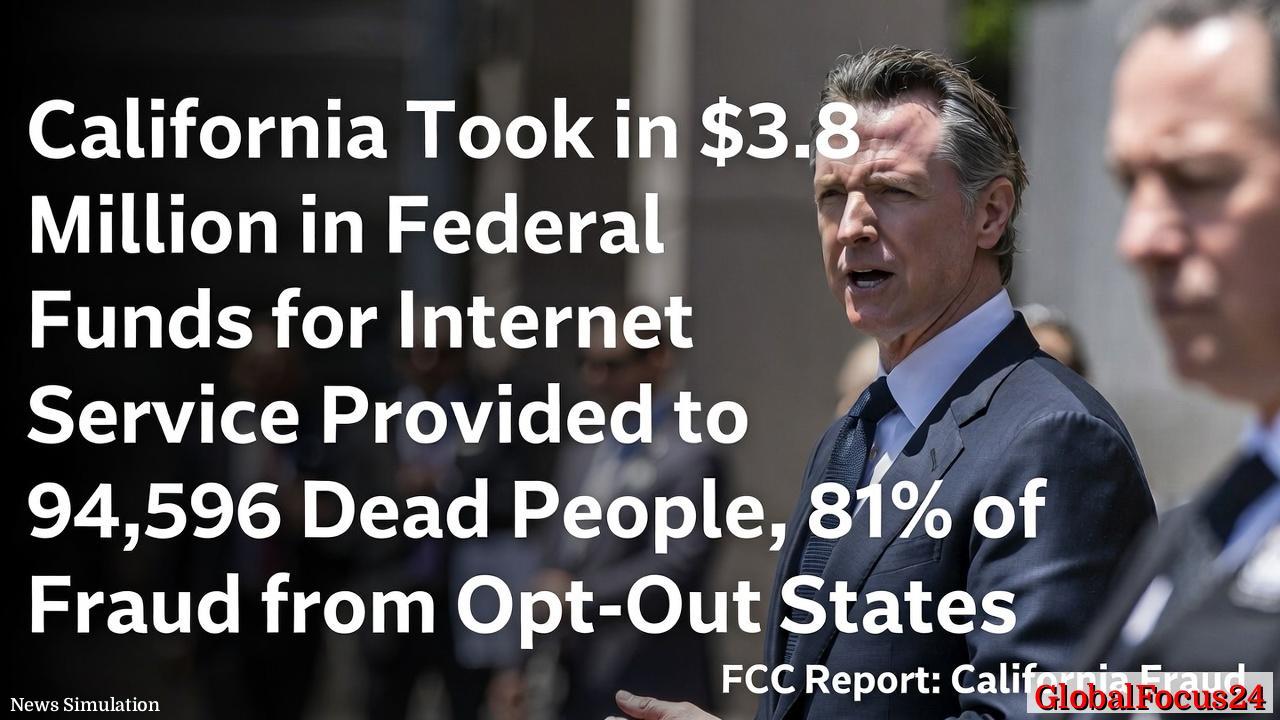
- Foremost figures: The report documents that California received approximately $3.8 million in Lifeline-related federal funds intended for subsidizing phone and internet service for low-income residents, during a five-year window from 2020 to 2025.
- The scale of fraudulent enrollments: The fraud attributed to deceased individuals and related enrollment irregularities was substantial within the three “opt-out” states highlighted in the inspector general’s advisory, with California accounting for a dominant share of the improper activity.
- Proportion of identifiable fraud: The advisory notes that roughly 81% of the fraud identified among the three opt-out states originated in California, suggesting a concentration of enrollment anomalies within the state’s Lifeline administration ecosystem.
- Nature of the misuse: Instances include enrollments in which subscribers were recorded after death or where deceased individuals were enrolled before or after death, as well as broader enrollment processes that did not adequately confirm identity or eligibility before benefits were dispensed.
- Administrative consequences: The report signals that the FCC revoked California’s authority to operate its own verification process for Lifeline, signaling a shift toward centralized oversight and standardized verification protocols to curb future improper disbursements.
Economic Impact: Local and National Ramifications
- Direct fiscal exposure: The $3.8 million in Lifeline funding associated with California episodes represents a measurable loss in a program designed to serve vulnerable communities. While the dollar figure may appear modest relative to the program’s total annual outlay, it highlights structural gaps in enrollment controls that can, over time, accumulate into larger sums if left unaddressed.
- Ripple effects on program sustainability: Fraud concerns can influence lawmakers’ willingness to expand or modify Lifeline benefits. If administrative costs rise or trust in the program erodes, stakeholders may push for tighter eligibility criteria at the expense of potential beneficiaries.
- Regional comparisons: California’s share of Lifeline fraud, as portrayed in the report, stands in contrast with the three-state group’s overall trends, which also include pockets of improper enrollments in other jurisdictions. The comparison invites a closer look at how state-level governance models, vendor relationships, and verification technologies contribute to or mitigate risk.
- Implications for connectivity equity: The Lifeline program is deeply tied to the digital inclusion narrative. Ensuring accurate enrollment supports not only fiscal accountability but also the broader mission of connecting residents to education and employment opportunities. When fraud concerns surface, it can prompt scrutiny of enrollment workflows, which in turn may lead to improved verification measures that ultimately enhance program credibility and beneficiary trust.
Regional Context: California in a National Landscape
- Population and infrastructure: California’s large and diverse population, urban concentrations, and extensive telecom infrastructure create a complex administrative environment for Lifeline. The state manages a broad network of local service providers, community organizations, and government agencies that touch Lifeline enrollment and verification.
- Comparison with other high-activity states: While California accounted for a significant portion of the fraud, states with different enrollment practices or oversight structures may exhibit varied risk profiles. A broader national analysis would need to assess how oversight intensity, data sharing, and cross-agency coordination influence fraud detection and prevention.
- Public-sentiment dynamics: Community awareness about Lifeline eligibility and protections can shape how residents interact with enrollment processes. In regions where residents are more aware of fraud risks and verification steps, enrollment integrity can improve, reducing both improper disbursements and false negative eligibility determinations.
Operational and Policy Implications: Strengthening Verification and Oversight
- Verification modernization: The FCC’s decision to revoke California’s control over verification signals a shift toward centralized or standardized identity-verification mechanisms. Modern approaches may include real-time cross-checks against multiple government and utility databases, biometric-enabled authentication where appropriate, and more stringent documentation requirements for enrollment.
- Data integrity and interoperability: Robust data governance is essential. Building interoperable data pipelines among federal, state, and local agencies can reduce duplication of effort and enable quicker identification of anomalies, such as enrollments linked to deceased individuals or mismatched identifiers.
- Vendor oversight and performance metrics: Given the role of service providers and third-party administrators in Lifeline enrollment, contract-based oversight should emphasize fraud resistance, audit rights, and performance-based penalties for lapses in verification.
- Beneficiary protections and outreach: Strengthening fraud controls need not come at the expense of access. Targeted outreach and clear guidance for eligible households, including easy-to-understand recourse mechanisms when errors occur, can help maintain trust in the program while reducing improper enrollments.
Public Reaction and Communications
- Community response: News of deceased individuals receiving Lifeline benefits can arouse concern about governance and accountability. Public communications that clearly outline steps being taken to improve verification and prevent future fraud can help reassure beneficiaries and taxpayers alike.
- Media and stakeholder engagement: Transparent reporting about the corrective actions, such as enhanced verification protocols and monitoring strategies, supports an informed public discourse. Stakeholders including consumer advocacy groups, telecom providers, and local governments may seek additional data to understand risk factors and to monitor progress.
What Comes Next: A Roadmap for Reform
- Short-term actions: Accelerate the deployment of standardized verification procedures across states, with a emphasis on real-time identity confirmation, cross-referencing death records, and immediate de-enrollment of ineligible beneficiaries.
- Medium-term reforms: Implement ongoing program integrity audits, expand staff training on fraud detection, and establish routine risk assessments to identify and mitigate emerging fraud vectors as enrollment technologies evolve.
- Long-term vision: Build a resilient Lifeline framework that preserves access for eligible households while maintaining stringent safeguards against misuse. This includes leveraging advances in data analytics, adopting best practices from other federal programs, and fostering interagency collaboration to maintain high standards of accuracy and accountability.
Regional Comparisons: Lessons from Neighboring States
- California versus its peers in the West: An audit-informed analysis might compare California’s verification practices to those of neighboring states with similar demographics and program structures. The comparison can reveal effective approaches—such as centralized enrollment portals or standardized documentation requirements—that reduce improper enrollments without creating bottlenecks for eligible applicants.
- National perspective: Across the country, Lifeline programs vary in administration—from state-run verification to more centralized models. The evolving landscape suggests a trend toward enhanced oversight, better data sharing, and the adoption of sophisticated fraud-detection tools to protect program integrity.
Conclusion: Balancing Access with Accountability
The Lifeline program remains a vital instrument for ensuring that low-income households retain access to essential communications services. The inspector general’s findings about California—highlighting the enrollment of deceased individuals and related fraud—underscore the ongoing need to reinforce verification, data integrity, and governance. While the dollar figures from this episode are not astronomical in isolation, they illuminate systemic vulnerabilities that policymakers and regulators must address to uphold trust in a program designed to bridge the digital divide. By embracing modernization, improving oversight, and maintaining a laser focus on beneficiary protections, the Lifeline program can continue to fulfill its mission while safeguarding taxpayer dollars and sustaining broad-based connectivity in California and beyond.