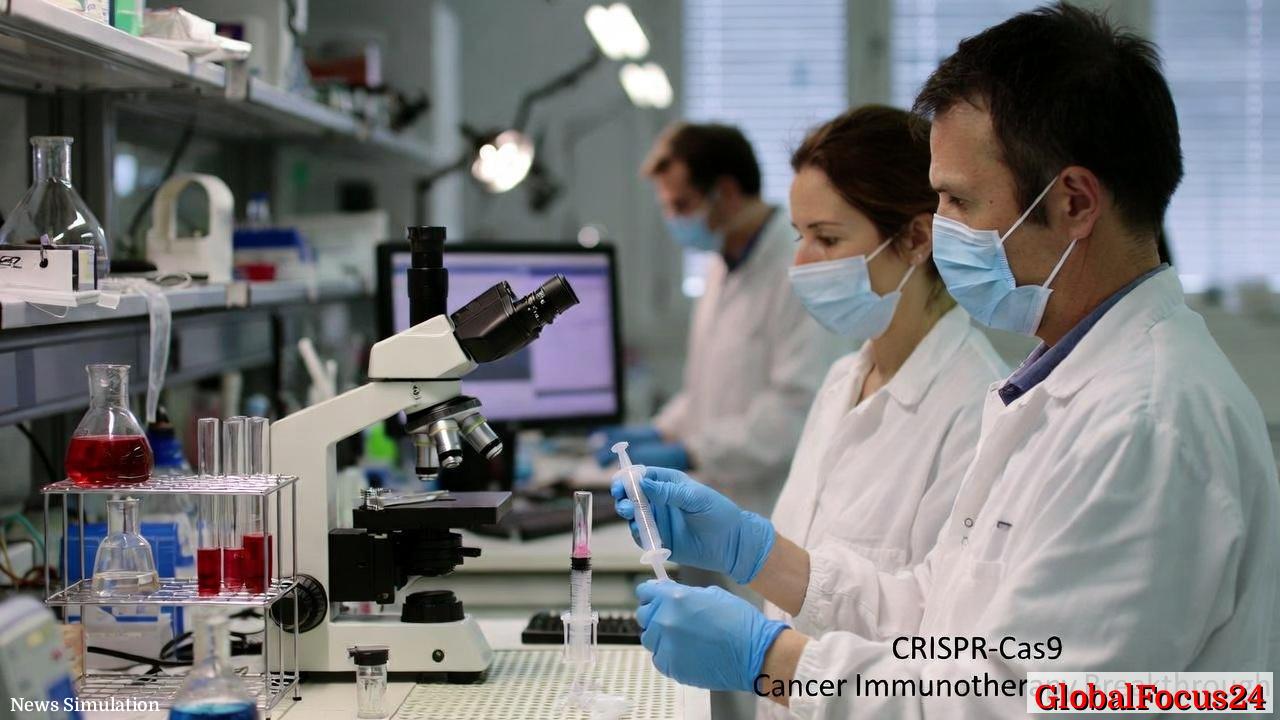
Scientists Unveil Breakthrough CRISPR Method to Create Cancer-Fighting Immune Cells Inside the Body
A New Era for In-Body Gene Editing
In a landmark achievement, scientists at the University of California, San Francisco (UCSF), have developed a technique that enables the human body itself to produce enhanced, cancer-fighting immune cells using CRISPR-Cas9 gene-editing technology. For the first time, researchers have successfully programmed T cells directly inside living organisms to become precision-targeted cancer hunters, potentially transforming how cancers such as leukemia and lymphoma are treated.
This method, refined by immunologist Justin Eyquem and his team, introduces a gene for a chimeric antigen receptor (CAR) into T cells through an injection. The receptor reprograms the immune cells to identify and attack malignant cells with remarkable specificity. In mouse models, the engineered T cells multiplied, targeted tumors, and successfully eliminated them without the need for chemotherapy or complex cell manipulation outside the body.
Breaking Free from Complex and Costly Cell Therapy
Conventional CAR-T therapies—currently one of the most advanced and effective forms of immunotherapy—require patients to undergo lengthy, multi-stage procedures. Doctors must extract a patient’s T cells, modify them genetically in a laboratory to carry tumor-recognizing receptors, multiply them in culture, and reinfuse them following chemotherapy or radiation conditioning. This process can take weeks, costs hundreds of thousands of dollars, and often leaves patients temporarily immunocompromised.
By contrast, the in-body, or “in vivo,” CAR-T generation approach eliminates those steps entirely. Instead of manipulating cells in a laboratory, the new method delivers precise genetic instructions directly into the body, where the immune system carries out the transformation organically. The result is a simpler, faster, and potentially more accessible therapy.
Dr. Eyquem described the development as a “step toward democratizing cell therapy”—moving from individualized manufacturing for each patient to a standardized, scalable treatment approach that could benefit many more people.
CRISPR-Cas9 Precision and Built-In Safeguards
The new technique relies on CRISPR-Cas9, a molecular “scissors” tool that can cut and paste DNA sequences with extreme accuracy. The UCSF team used it to insert the CAR gene into a “safe harbor” site within the genome of T cells—a region known to avoid disrupting other essential genes.
Safety is central to the method’s design. Built-in molecular safeguards ensure the CRISPR components remain active only in T cells, minimizing any chance that other cell types might be inadvertently modified. The team also developed systems that prevent off-target insertions, which have historically been a major concern with gene-editing technologies.
In preclinical tests with mice, the edited cells proliferated in the bloodstream, homed in on tumors, and effectively destroyed cancer cells without evidence of genomic instability or autoimmune complications. Importantly, animals did not experience the toxic side effects commonly associated with chemotherapy conditioning before CAR-T infusion.
From Bench to Bedside: The Road Ahead
While the findings offer a significant leap forward, translating them into human trials will require rigorous testing. The UCSF team is now working to refine delivery methods and evaluate long-term safety. Most likely, the first human studies will focus on blood cancers such as acute lymphoblastic leukemia (ALL) and diffuse large B-cell lymphoma (DLBCL), diseases where existing CAR-T therapies have already proven curative for some patients.
Clinical application may hinge on developing delivery vehicles that can efficiently reach T cells in humans. The researchers used engineered viral vectors—similar to those already widely used in gene therapy—to deliver the CRISPR components. Future methods may employ nanoparticle carriers or lipid-based delivery systems, which could lower costs and improve safety profiles.
If successful, this strategy could eliminate many of the logistical bottlenecks that limit access to CAR-T therapy today. Hospitals could administer a single injection, initiating the body’s own immune modification process, rather than coordinating with specialized manufacturing centers.
Economic and Healthcare Impact
The economic implications of this innovation are profound. Current CAR-T treatments, such as those developed by major biotechnology companies, often cost upwards of $400,000 to $500,000 per patient, excluding hospital and supportive care expenses. In many regions, insurance systems or public healthcare programs can reimburse only a fraction of this, restricting access to a small number of eligible patients.
An in vivo CAR-T platform could reduce manufacturing steps, labor costs, and turnaround time dramatically. Lowering production costs may allow more hospitals—particularly smaller community centers—to offer advanced immunotherapies without specialized facilities. For underfunded healthcare systems and countries with limited biotechnology infrastructure, this could mark a turning point in cancer treatment accessibility.
Analysts suggest that cost reductions in the range of 70–90% could be achievable if the technology scales effectively. That kind of savings could not only relieve financial strain on health systems but also make early-stage or high-risk patients eligible for treatment, broadening clinical benefit.
Historical Context: From Discovery to Direct In-Body Editing
The concept of gene editing dates back decades, but only in the past ten years has precise, programmable control become feasible. CRISPR-Cas9, first demonstrated in mammalian cells around 2013, revolutionized biology by enabling scientists to cut and reinsert genes with accuracy similar to editing text on a computer.
CAR-T therapy, meanwhile, emerged in the early 2010s and rapidly gained approval for several blood cancers by 2017. Despite success stories, the therapy’s complexity and price limited it mainly to specialized academic centers. Much of the field’s subsequent innovation has focused on improving accessibility, shortening production timelines, and reducing side effects.
The UCSF breakthrough effectively merges these two scientific revolutions—CRISPR precision and CAR-T power—into a single streamlined procedure. It marks one of the first demonstrations that complex gene engineering tasks can occur safely inside a living organism, rather than in a lab dish.
Regional and Global Perspectives
Globally, the demand for safer and more affordable cancer immunotherapies is intense. In the United States, cancer remains the second leading cause of death, with more than 600,000 fatalities annually. Europe faces similar statistics, while developing nations often struggle with late-stage diagnoses and limited treatment access. The ability to distribute a standardized injectable therapy could bridge the gap between rich and poor healthcare systems.
In Asia, where large patient populations and government-backed biotech investments are driving rapid innovation, in-body cell therapy could find early adoption. China and South Korea already lead in CRISPR research and clinical translation, potentially making them key players in scaling the technology beyond early prototypes. Within the U.S., California continues to dominate the cell therapy frontier, leveraging its research universities, biotech firms, and venture capital networks.
Regulatory agencies such as the U.S. Food and Drug Administration (FDA) will likely demand extensive safety validation, particularly focusing on precision control of genetic edits and immune responses. However, the potential for a transformative therapy that cuts costs, improves outcomes, and expands access could accelerate pathways for conditional approval.
Challenges and Future Directions
Despite the enthusiasm, several challenges remain. Delivering genetic material efficiently and specifically to T cells in a large human body is no small task. The immune system’s complexity poses difficulties in ensuring uniform modification without triggering adverse reactions or inflammation. Additionally, researchers must verify that in vivo-generated CAR T cells persist long enough to provide durable remission without attacking healthy tissues.
Ethical considerations also arise with any form of direct gene editing. Even though the modifications target somatic (non-reproductive) cells, long-term monitoring will be essential to rule out unintended consequences. Scientists caution against premature hype, emphasizing that while results in mice are impressive, human biology introduces additional variables.
Future work is expected to refine how CAR genes integrate into the genome, optimize vector delivery systems, and test programmable control switches to regulate edited cell activity. Beyond cancer, similar strategies could one day be used to correct genetic immune disorders or fight chronic infections where cellular reprogramming offers therapeutic advantage.
A Glimpse of the Post-Laboratory Era of Medicine
If human trials confirm the safety and efficacy of this in-body CRISPR approach, it could redefine the landscape of modern medicine. Gene and cell therapy would no longer depend solely on laboratory infrastructure or individual cell manufacturing, but instead on molecular programming that leverages the body’s own systems for healing.
Such a shift mirrors broader trends in personalized medicine—using genomic data to direct individualized yet scalable treatments. With this innovation, the body itself becomes the manufacturing platform, creating tailored therapies at the cellular level.
As scientists move toward clinical translation, optimism is tempered by caution. The promise of inexpensive, one-step cancer immunotherapy carries extraordinary implications—not only for oncology but for the evolving relationship between biology and technology. For patients awaiting new hope after exhausting conventional treatments, the horizon of injectable gene-edited cell therapy signals that the future of cancer care may soon function from within.