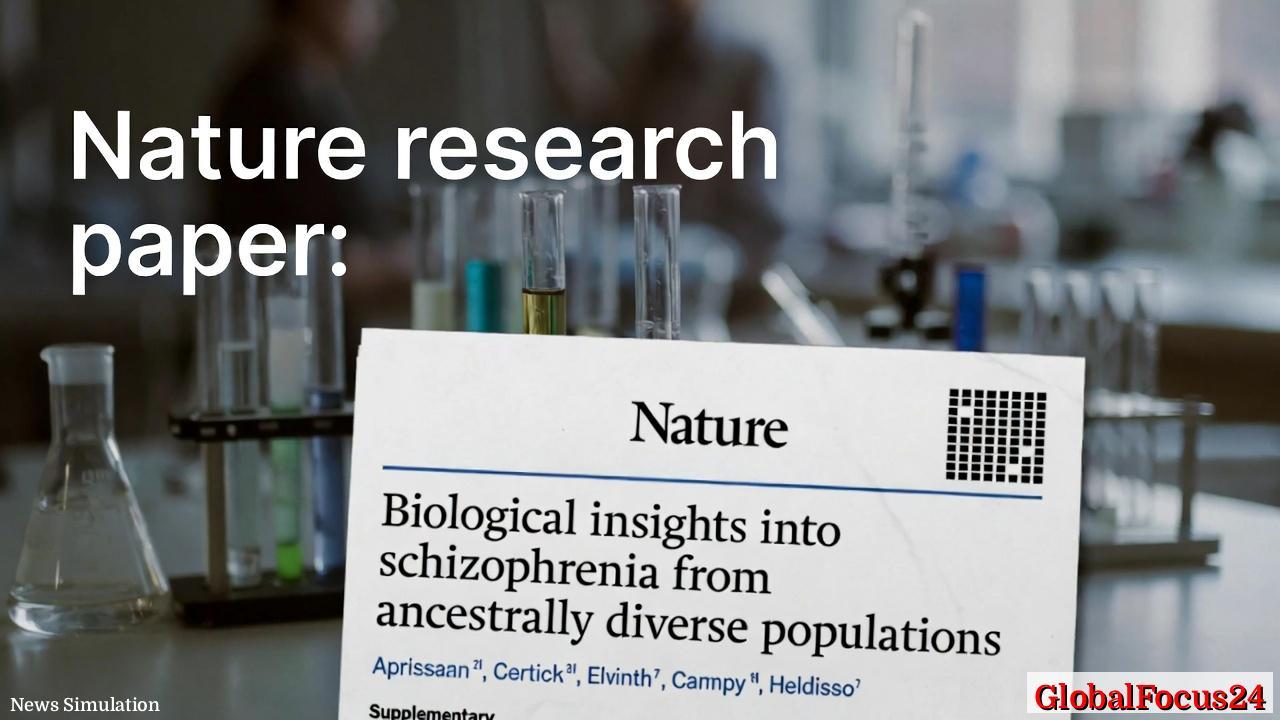
)Ancestral Diversity Unlocks New Insights into Schizophrenia Biology, Nature Study Finds
A landmark Nature study leveraging ancestrally diverse populations reveals novel biological insights into schizophrenia, offering fresh angles for understanding its roots and guiding future treatments. By drawing on genetic data from multiple ancestral backgrounds, researchers illuminate how historic population movement and genetic variation intersect with this complex psychiatric condition, underscoring the importance of inclusive science in decoding brain disorders.
Historical Context: From Early Theories to Modern Genomics Schizophrenia has long stood as one of psychiatry’s most challenging disorders, with debates about its origins spanning anatomy, neurodevelopment, and genetics. Early 20th-century theories often emphasized environmental and psychosocial contributors, while late-century advances highlighted rare, high-penetrance genetic mutations in family studies. In recent years, large-scale genome-wide association studies (GWAS) have mapped many common variants that modestly increase risk, but these findings historically concentrated on populations of European descent. The new Nature paper expands the lens beyond those cohorts, incorporating diverse ancestries to capture a broader spectrum of genetic variation and to refine our understanding of schizophrenia’s polygenic architecture. This shift toward inclusivity reflects a broader movement in genomics to reduce bias and improve the generalizability of discoveries across populations.
Key Findings: Biological Pathways and Gene Networks
- Polygenic risk refined: Integrating diverse ancestries improves the accuracy of polygenic risk scores, revealing that risk is distributed across a larger set of genes than previously recognized when analyzed in a multi-ancestry context. This multiplicity of contributing loci helps explain why schizophrenia manifests with considerable heterogeneity in symptoms and onset across individuals. The study’s multi-ancestry approach strengthens confidence in several implicated biological pathways, including synaptic signaling, neuronal development, and immune-related processes that interface with brain function.
- Pathway convergence: Across ancestries, researchers identify convergent signals in neural communication networks, particularly those governing excitatory-inhibitory balance and synaptic plasticity. These convergences suggest that core neurobiological mechanisms underlying schizophrenia are shared across populations, even as specific variant frequencies differ by ancestry. Such convergence also points to targetable biological processes for therapeutic development that could be effective across diverse patient groups.
- Rare and common variant interplay: By combining data on common variants with emerging signals from rare-variant analyses, the study highlights how both classes contribute to risk. The rare variants appear to impact gene function in ways that may augment the effects of cumulative common-variant risk, offering a more integrated view of genetic architecture that informs how risk accumulates within neural circuits.
Economic Impact: Implications for Healthcare Systems and Innovation
- Precision medicine with broader reach: The enhanced accuracy of risk prediction in diverse populations supports more equitable screening and early-intervention strategies. This has implications for healthcare budgeting, as earlier identification can reduce long-term costs associated with delayed treatment, hospitalizations, and comorbidities. Inclusive genetic risk assessments also reduce the risk of misclassification that can occur when studies rely on narrow population samples.
- Sector collaborations: The study spotlights opportunities for collaborations among academic centers, biobanks, biopharmaceutical companies, and healthcare providers to translate genetic insights into diagnostics, biomarkers, and personalized therapies. Such partnerships can stimulate investment in diverse genomic databases and computational infrastructure, contributing to regional biotech ecosystems that support high-skilled jobs and local innovation.
- Market dynamics for therapeutics: As insights into neural pathways mature, there is potential for the development of targeted therapies aimed at modulating synaptic signaling and immune-neural interfaces. While market forecasts remain contingent on clinical trial outcomes, the multi-ancestry evidence base strengthens the rationale for developing drugs with broad applicability, potentially broadening patient access and improving cost-effectiveness across healthcare systems.
Regional Comparisons: The United States, Europe, and Global Context
- United States: In a country with significant ancestry diversity, inclusive genomics aligns with ongoing efforts to reduce health disparities and improve outcomes in mental health care. The findings support integrating ancestry-aware genetic risk assessment into clinical practice, particularly in urban centers with diverse populations and large medical research networks.
- Europe: European cohorts have historically dominated genetic studies in schizophrenia. By incorporating ancestry-diverse data, researchers in Europe can recalibrate risk models to better reflect regional population substructure and environmental contexts, potentially improving screening and early intervention programs across diverse urban and rural settings.
- Global landscape: Worldwide, the study emphasizes the value of expanding biobank collaborations in Africa, Asia, the Americas, and the Pacific Islands. Broader representation can accelerate discovery, improve the portability of polygenic risk scores, and foster global equity in mental health research, benefiting researchers and patients beyond any single region.
Clinical and Public Health Implications: Toward More Inclusive Care
- Diagnostic refinement: More accurate genetic risk profiling across ancestries can inform differential diagnoses for psychotic-spectrum disorders, enabling clinicians to tailor monitoring and treatment plans to individual risk landscapes. This precision approach may help identify prodromal signs earlier, potentially reducing the duration of untreated mental illness.
- Treatment personalization: Understanding how synaptic and immune pathways contribute to schizophrenia across populations opens avenues for personalized treatments. Therapies that address neural signaling dysregulation or neuroinflammatory components may be evaluated with greater confidence in diverse patient groups, improving trial generalizability.
- Stigma reduction and awareness: Public health messaging that highlights universal neurobiological underpinnings of schizophrenia, while acknowledging genetic diversity, can help reduce stigma and promote understanding. Communicating these insights in accessible terms supports community education programs and destigmatization efforts.
Methodological Highlights: Why Ancestry Matters in Genomic Research
- Reference panel enhancement: Including diverse ancestries improves imputation quality and variant discovery, reducing biases that arise when analyses favor well-represented populations. This leads to more accurate estimates of genetic effect sizes and better interpretation of biological relevance.
- Fine-mapping precision: Cross-ancestry comparisons help narrow down causal variants more effectively than single-population analyses. By observing how different genetic backgrounds affect linkage patterns, researchers can pinpoint variants that truly drive risk, accelerating downstream functional studies.
- Replicability and robustness: Diverse cohorts help validate findings across genetic backgrounds, increasing confidence that signals are not artifacts of a particular population structure. This robustness is essential for translating basic research into clinically meaningful interventions.
Public Reactions: Credibility and Hope in a Complex Field
- Patient and clinician communities express cautious optimism that multi-ancestry research brings us closer to universally applicable insights, reducing uncertainty around risk and treatment prospects. The broader scientific society views these results as a milestone in fair representation, potentially guiding future research funding toward inclusive study designs. Public health advocates welcome the potential for more equitable mental health care approaches that consider the genetic diversity of communities.
Future Directions: What Comes Next for Schizophrenia Genomics
- Expanding diversity: Researchers plan to include even more ancestry groups, as well as populations with unique environmental exposures, to refine risk models further and explore gene-environment interactions that shape disease trajectories.
- Functional follow-up: Laboratory studies will aim to translate genetic associations into cellular and animal models, clarifying how identified genes influence synaptic function and immune signaling. These efforts are essential to uncover actionable drug targets.
- Translation into practice: As risk prediction and pathway insights become more robust, clinical guidelines may incorporate ancestry-aware genetic information to inform screening, prevention, and treatment strategies, with ongoing evaluation of real-world outcomes.
Contextual Summary: A New Era for Schizophrenia Biology The Nature study marks a pivotal moment in psychiatric genomics by centering ancestrally diverse data to illuminate shared biological pathways behind schizophrenia, while also accounting for population-specific genetic variation. This dual approach strengthens the biological plausibility of discovered mechanisms and enhances the potential for broadly effective interventions. As the field advances, the emphasis on inclusivity in research design is likely to reshape both scientific inquiry and clinical practice, with lasting implications for how society understands and treats complex brain disorders.
Note: The article above synthesizes themes from the recent Nature publication, focusing on historical context, biological insights, economic implications, and regional considerations without endorsing any particular news outlet or editorial viewpoint.