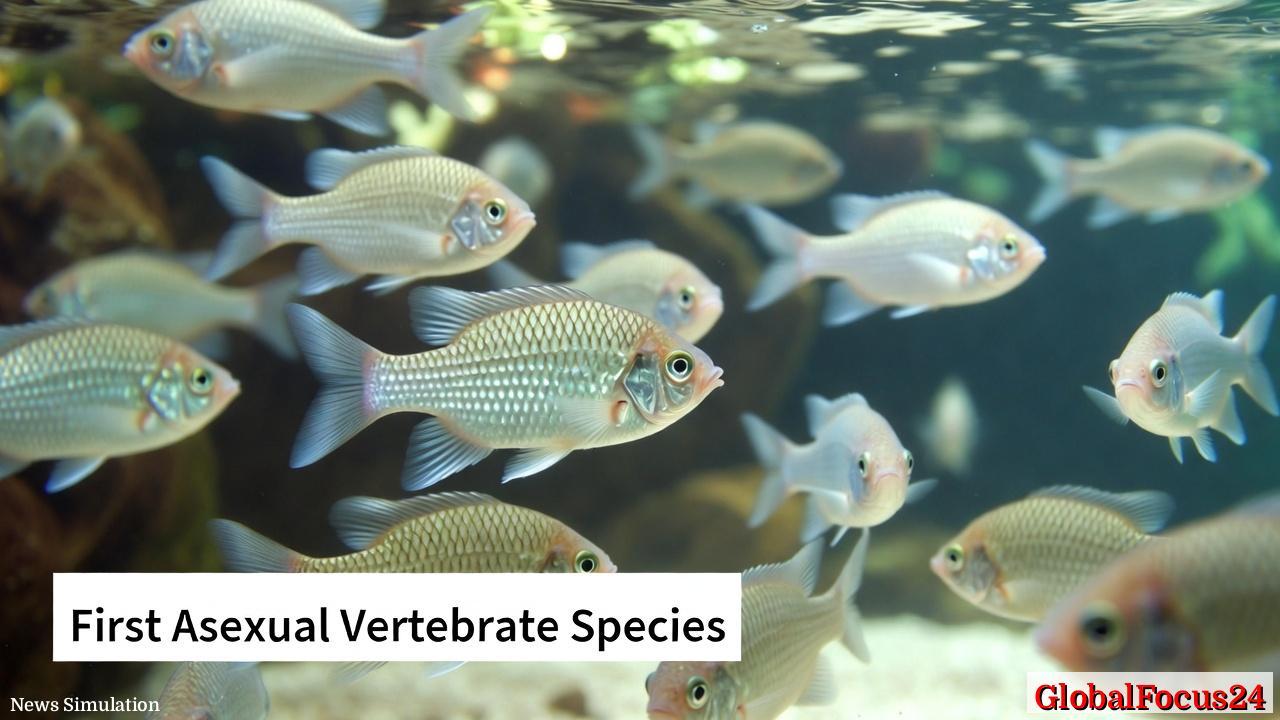
Amazon Molly Defies Extinction Clock: A Century of Asexual Survival Rewrites Evolutionary Boundaries
A remarkable example in evolutionary biology has emerged from the rivers of South America and beyond, as an all-female fish species known as the Amazon molly has persisted for more than 100,000 years through asexual reproduction. Poecilia formosa, first identified in 1932 as the earliest known vertebrate to reproduce without sex, achieves genetic cloning through gynogenesis, a process in which eggs begin development after stimulation by sperm from related species, yet the paternal DNA contributes no genetic material. This discovery has profound implications for how scientists understand genetic maintenance, mutation management, and the long-term viability of asexual lineages.
Historical context: the long arc of cloning in vertebrates The identification of Poecilia formosa as asexual, all-female, vertebrate reproducing without conventional sexual mating marked a watershed moment in the study of reproductive strategies. For decades, biologists viewed sexual reproduction as an evolutionary advantage because it creates genetic diversity that helps populations adapt to changing environments. The Amazon molly’s persistence for hundreds of thousands of years challenges that simplistic narrative, suggesting that clonal lineages can endure if they possess mechanisms to manage mutations and maintain genome integrity over time.
The species’ discovery in the early 20th century catalyzed a broader inquiry into the complexity of reproduction. Early researchers noted that while the Amazon molly relies on sperm to trigger egg development, the resulting offspring are genetic clones of the mother. This rare form of reproduction, known as gynogenesis, sits at the intersection of sexual signaling and asexual propagation, illustrating nature’s capacity for nuanced strategies beyond binary classifications.
Genetics and the backbone of longevity: gene conversion as a preservation mechanism Central to the Amazon molly’s enduring genome is a genetic mechanism called gene conversion. This process enables the fish to copy and paste DNA segments between chromosomes, effectively overwriting deleterious mutations and enabling natural selection to prune harmful changes even without DNA contributions from sperm. In practical terms, gene conversion acts as a corrective repair system within the genome, mitigating the accumulation of mutations that typically accompanies a lack of recombination in asexual organisms.
This mechanism has important implications for how we understand Muller's ratchet—the theoretical tendency for asexual lineages to accumulate irreversible deleterious mutations over time. While it is accurate that an asexual lineage experiences mutations at a different rate than sexually reproducing relatives, the Amazon molly’s genome shows no functional decay, indicating that gene conversion can compensate for some of the genetic risks associated with clonality. The net effect is a genome that remains adaptable and robust enough to sustain thriving populations across millennia.
Economic and ecological implications: how a unique reproductive strategy shapes ecosystems The Amazon molly’s longevity has ripple effects beyond academic interest. In freshwater ecosystems, clonal species can influence population dynamics, competition for resources, and predator-prey relationships in ways that differ from sexually reproducing species. For instance, the ability to produce numerous genetically identical offspring can enable rapid population growth under favorable conditions, potentially altering local food webs and nutrient cycles. Yet the robustness of the genome, thanks to gene conversion, helps prevent the buildup of harmful mutations that could compromise fitness over time, thereby supporting stable contributions to the ecosystem.
From an economic and conservation perspective, understanding the Amazon molly’s genetic maintenance strategies can inform aquaculture practices and biodiversity management. Species that reproduce clonally must be managed with attention to potential vulnerabilities, such as reduced genetic diversity in the face of emerging pathogens. The presence of gene conversion as a natural corrective mechanism invites researchers to explore whether similar processes or their analogs could be promoted or mimicked in managed populations to sustain health and resilience.
Regional comparisons: how nearby freshwater systems reflect divergent evolutionary paths The Amazon molly’s experience across its native range offers a lens into regional ecological variation. In the Amazon Basin and neighboring river systems, climate variability, water chemistry, and community composition create a mosaic of selective pressures. Regions with dynamic predator regimes and fluctuating environmental conditions may favor genetic strategies that balance stability with adaptability. Comparatively, other clonal lineages across the globe—whether in plants or animals—often exhibit more pronounced signs of genetic decay when isolated from recombination and outcrossing. The Amazon molly stands out precisely because of its genome maintenance mechanism, which helps offset some of the typical drawbacks of asexual reproduction.
The broader picture: what the Amazon molly teaches about evolution and resilience The enduring viability of Poecilia formosa underscores a nuanced view of evolution that accommodates multiple strategies for persistence. It shows that asexual lineages are not automatically condemned to rapid decline; rather, their fate depends on the genetic toolkit they possess and the ecological context in which they persist. Gene conversion demonstrates that genomes are not static blueprints; they are dynamic systems capable of repairing themselves and maintaining function over vast timescales.
Public reaction and scientific curiosity The discovery of gene conversion as a sustaining force in the Amazon molly’s genome has sparked renewed interest among evolutionary biologists, geneticists, and ecologists. Observers emphasize that while the species remains a singular case, its success invites deeper exploration into the prevalence of similar repair mechanisms in other asexual organisms. Public curiosity often centers on how such organisms navigate the balance between genetic sameness and adaptability, a question that resonates with broader concerns about biodiversity, resilience, and the future of ecosystems under climate change.
Historical milestones and recent breakthroughs
- Early 20th century: identification of Poecilia formosa as an all-female, asexually reproducing vertebrate.
- Mid-20th century: recognition of gynogenesis as the mechanism by which offspring are produced without paternal genetic contribution.
- Early 21st century: advances in genomics reveal complex repair processes, including gene conversion, that help manage mutation accumulation in clonal lineages.
- Recent years: accumulating evidence that gene conversion can slow or counteract Muller's ratchet, enabling long-term viability of asexual populations.
Scientific implications for future research Researchers now have a clearer framework to investigate how gene conversion operates at the molecular level in Poecilia formosa and whether similar processes exist in other clonal species. Future studies may focus on sequencing broader populations to map variation, identifying environmental triggers that influence gene conversion rates, and examining how these biological strategies interact with ecological pressures such as disease outbreaks and resource scarcity. These inquiries could broaden our understanding of genome resilience and inform conservation strategies for a wide range of organisms facing rapid environmental change.
Implications for biodiversity policy and conservation planning Understanding the Amazon molly’s genetic resilience highlights the importance of preserving natural habitats that support diverse ecological interactions. Conservation planning can benefit from recognizing that some species deploy sophisticated internal genome-management strategies that contribute to long-term survival. Protecting ecosystems that harbor such unique life-history traits helps maintain biodiversity and the ecological services these species provide, from nutrient cycling to habitat stability. Policymakers can use these insights to advocate for habitat protection, water quality standards, and research investments that illuminate the genetic safeguards embedded in living systems.
A note on the limitations and the path forward While the Amazon molly offers a compelling example of genetic maintenance in asexual organisms, it does not imply that all clonal lineages share the same resilience. Muller's ratchet remains a concern for many asexual populations, and gene conversion may not be equally effective across species. Ongoing comparative genomics, experimental evolution studies, and ecological monitoring will be essential to determine how widely such mechanisms occur and how they influence long-term viability in varying contexts. The broader takeaway is not a blanket endorsement of asexuality, but an invitation to recognize the diversity of evolutionary solutions that life has discovered.
Conclusion: a new chapter in the study of evolution and genome maintenance The Amazon molly’s survival over more than 100,000 years reframes our understanding of how genomes endure in the absence of sexual recombination. Through the gene conversion mechanism, this all-female fish species demonstrates that genetic repair and selective pruning can counterbalance the risks associated with clonality. Its story, anchored in historical curiosity and expanded by modern genomics, offers a nuanced narrative about resilience, adaptation, and the complexity of life’s evolutionary toolkit. As scientists continue to map the depths of these processes, the Amazon molly stands as a testament to the extraordinary strategies that enable life to persist across epochs and environments.