Arctic Frontiers, Global Stakes: Reporting from a Warming Frontier
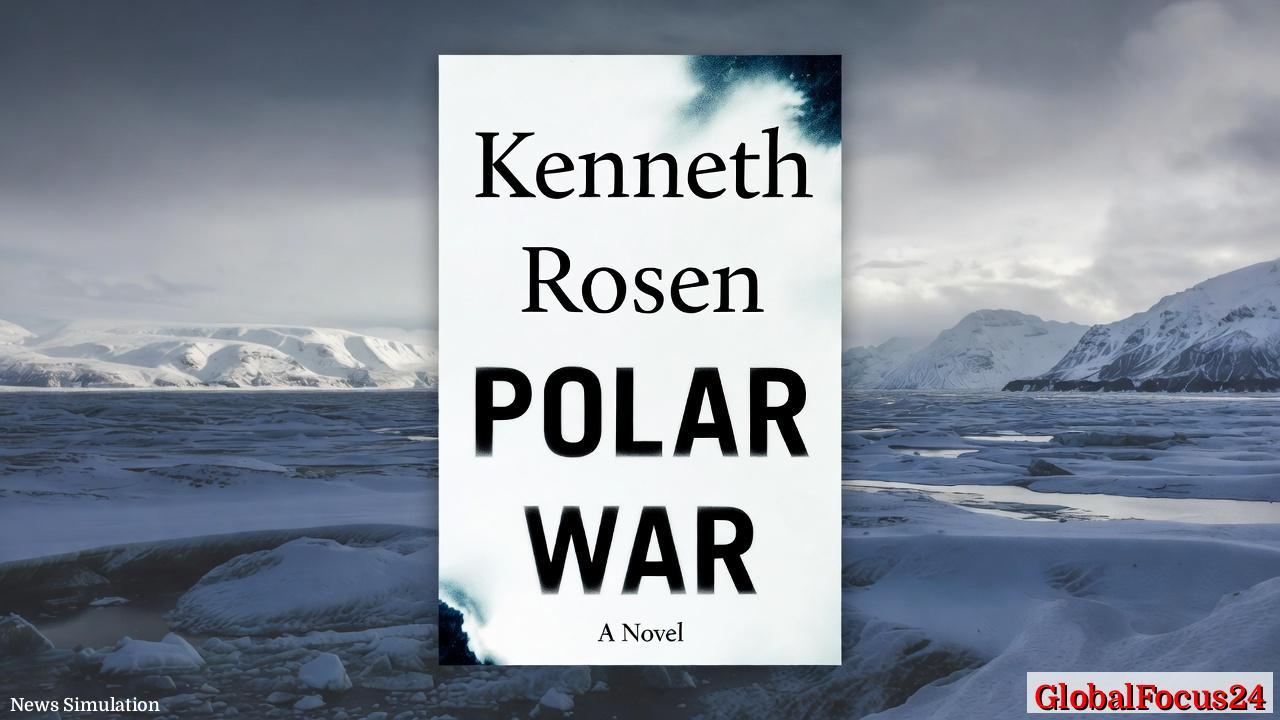
The Arctic is no longer a distant icebound region framed only by maps and scientific journals. It has become a dynamic theater where climate realities, resource considerations, and geopolitical dynamics converge. Kenneth Rosen’s new collection, Polar War, brings the everyday drama of this frontier into sharper focus, drawing readers into immersive sites across the Arctic while offering a lucid, ground-truth counterpoint to abstractions about “competition” and “competition for resources.” The reportage underlines how local communities, business interests, and distant capitals intersect at the edge of the world, shaping policy, economies, and the pace of environmental change.
Historical backdrop: from exploration to resilience The Arctic has long been a space of exploration and strategic interest. In the early chapters of modern Arctic history, explorers and scientists charted unknown frontiers, laying the groundwork for scientific understanding and international cooperation. Over the last century, economic cycles—mineral exploration, sea routes, and later the energy transition—have repeatedly reframed the region’s significance. Rosen’s reporting situates these shifts within a longer arc: a place where indigenous knowledge, coastlines battered by warming, and new infrastructure converge to redefine what “normal” looks like for the North.
The region’s climate trajectory is a central thread in Polar War. Warming temperatures have shortened sea-ice seasons, expanded navigation windows, and opened previously inaccessible zones to mining, drilling, and large-scale shipping. Yet the same changes intensify uncertainties for local communities, wildlife, and traditional livelihoods. Rosen’s dispatches illuminate these paradoxes with precise detail—ice charts, weather patterns, and the seasonal rhythms of hunting and fishing—while also threading in the human dimension: families adapting to shifting ice, crews recalibrating routes, and towns investing in resilience.
Economic impact: from seasonality to strategic trade The Arctic’s economic calculus has evolved in tandem with climate shifts and geopolitical realignments. Historically, extraction—oil, gas, minerals—and strategic shipping formed the backbone of Arctic activity. Today, beyond resource extraction, the region is increasingly a node in global supply chains, with new infrastructure, ports, and ships recalibrating regional economics. Polar War captures these dynamics by showing, rather than merely describing, the consequences of policy and market signals.
- Resource development and risk management: As exploration returns to focus in parts of the Arctic, companies weigh the potential rewards against logistical costs, environmental safeguards, and regulatory regimes. Rosen’s reporting highlights how operators balance technical feasibility with environmental stewardship, and how regulatory standards, local consent, and community anticipations shape project timelines.
- Transportation corridors and efficiency gains: The reduction in sea-ice thickness for longer periods of the year translates into more days of open-water navigation. This shift can shave weeks off travel times between Asia, Europe, and North America, reshaping freight economics and ship-traffic patterns. Rosen’s scenes of port activity, icebreaker support, and vessel routing demonstrate the operational realities behind macroeconomic projections.
- Local economies and diversification: Arctic communities increasingly rely on a mix of traditional livelihoods and diversified income sources—from tourism tied to natural beauty and biodiversity to Arctic science facilities and service sectors that support seasonal populations. The reportage underscores how communities invest in education, infrastructure, and healthcare to weather volatility and to attract sustained investment.
Regional comparisons: echoes across the circumpolar map Rosen’s fieldwork spans several Arctic subregions, offering pointed comparisons that reveal both shared challenges and unique conditions:
- Barents region (northern Norway, Sweden, Finland, and Russia’s Far East): This corridor has benefited from established energy infrastructures, significant cross-border collaboration, and stable, long-standing governance frameworks. Yet it also faces geopolitical frictions and the need to balance development with environmental safeguards. The reporting captures how communities leverage regulatory predictability and international cooperation to foster steady growth, while remaining vigilant about external pressures.
- Greenland and the Danish territories: Here, the interplay of sovereignty, resource potential, and tourism-driven economies comes into sharp relief. Rosen documents the delicate balance between investment, cultural preservation, and the risks of overreliance on volatile commodity cycles. The region’s subsidized infrastructure and evolving energy mix are shown as critical to maintaining resilience against climate shocks.
- Alaska and the North American Arctic: In the U.S. context, Rosen emphasizes the role of federal and state policy in shaping energy transitions, indigenous rights, and coastal resilience. The dynamics of Arctic governance—coordination among local communities, indigenous corporations, and federal agencies—are portrayed as a practical test of how democracies adapt to frontier conditions.
- Canadian Arctic: The reportage notes Canada’s emphasis on community-led planning, environmental assessments, and multi-stakeholder decision-making. It presents a nuanced view of how northern development can proceed with safeguards that protect ecosystems and respect cultural heritage.
Geopolitical dimensions without partisan framing The Arctic has become a stage for strategic considerations, yet the reportage avoids inflating rivalry into simplistic narratives. Instead, it presents observable tensions—military activities at the periphery, contested sea routes, and investment competition—while emphasizing the quieter but equally consequential shifts in governance, infrastructure, and community agency. The piece demonstrates how regional actors manage risk and opportunity through diplomacy, joint research initiatives, and transparent planning that prioritizes safety and sustainability.
Public reaction and social dimensions Polar War captures a sense of urgency that permeates northern communities and port cities alike. Locals express concern about environmental changes, job stability, and the need for skilled training to participate in expanding Arctic industries. At the same time, there is a steady undercurrent of resilience: communities adapting procurement practices, investing in resilient housing and energy efficiency, and leveraging tech-enabled services to maintain connectivity in remote areas. The reportage uses vivid, on-the-ground scenes to convey both the anxiety and the pragmatism driving decision-making in the Arctic.
Environmental considerations and climate adaptation Climate realities shape every facet of Arctic life and economy. The articles highlight not only the melting ice and thawing permafrost but also the cascading effects on infrastructure, wildlife, and traditional ways of life. Adaptation strategies—flood-resistant housing, climate-resilient infrastructure, and careful ecological monitoring—are presented as essential components of sustainable Arctic development. Rather than presenting adaptation as a burden, Rosen frames it as an opportunity for innovation, collaboration, and improved quality of life for northern residents.
Technological and scientific underpinnings The Arctic’s reinvigorated relevance is closely tied to advances in science and technology. Satellite monitoring, autonomous navigation, environmental sensors, and data-driven risk assessment tools contribute to safer operations and more informed policymaking. Rosen’s dispatches illustrate how science and practical fieldwork intertwine: researchers correcting models with field observations, engineers testing resilience against extreme conditions, and local knowledge informing scientific inquiry. This synthesis underscores a broader truth: robust Arctic policy relies on comprehensive data, cross-disciplinary collaboration, and a willingness to adapt in light of new information.
Policy implications and governance without bias The article set presents policy implications through the lens of practical outcomes rather than partisan rhetoric. It underscores the importance of clear regulatory frameworks, transparent impact assessments, and consistent enforcement to foster investment while protecting the environment and communities. The governance narrative reflects how northern administrations—often international in scope due to cross-border activity—navigate financing, indigenous rights, and environmental protections. In doing so, the reporting provides readers with a grounded sense of how policy choices translate into real-world results for workers, families, and ecosystems.
Illustrative scenes that anchor the narrative To convey the texture of Arctic life, the reportage offers concrete vignettes: a vessel crew recalibrating routes during a late-season ice edge, an indigenous cooperative coordinating with a multinational company on habitat restoration, a school’s science club collecting meteorological data to contribute to long-term climate models, and a municipal official balancing budget constraints with the urgency to upgrade coastal defenses. These scenes ground abstract trends in lived experience, giving readers a tangible sense of the Arctic’s complexity and momentum.
Conclusion: a frontier that demands careful stewardship Rosen’s Polar War stands as a timely reminder that the Arctic’s evolving role in global economics, climate policy, and geopolitical calculations demands careful, evidence-based attention. The Arctic is not a static backdrop but an active arena where climate change intensifies pressures while also unlocking new possibilities for collaboration, innovation, and sustainable development. The reportage highlights that progress in this region hinges on a combination of disciplined governance, robust science, community leadership, and inclusive economic planning.
In essence, the Arctic’s future will be written by those who pair rigorous data with respect for local voices, who see opportunity not as a zero-sum game but as a path toward resilient growth that preserves a unique and irreplaceable environment. As global markets increasingly move across northern waters and resource claims become more intricate, attentive reporting that translates complex dynamics into accessible, human-centered narratives will remain essential for policymakers, investors, scholars, and residents alike.