Arctic Icebreakers: A Strategic Expansion to Secure Sea Routes and Economic Vitality
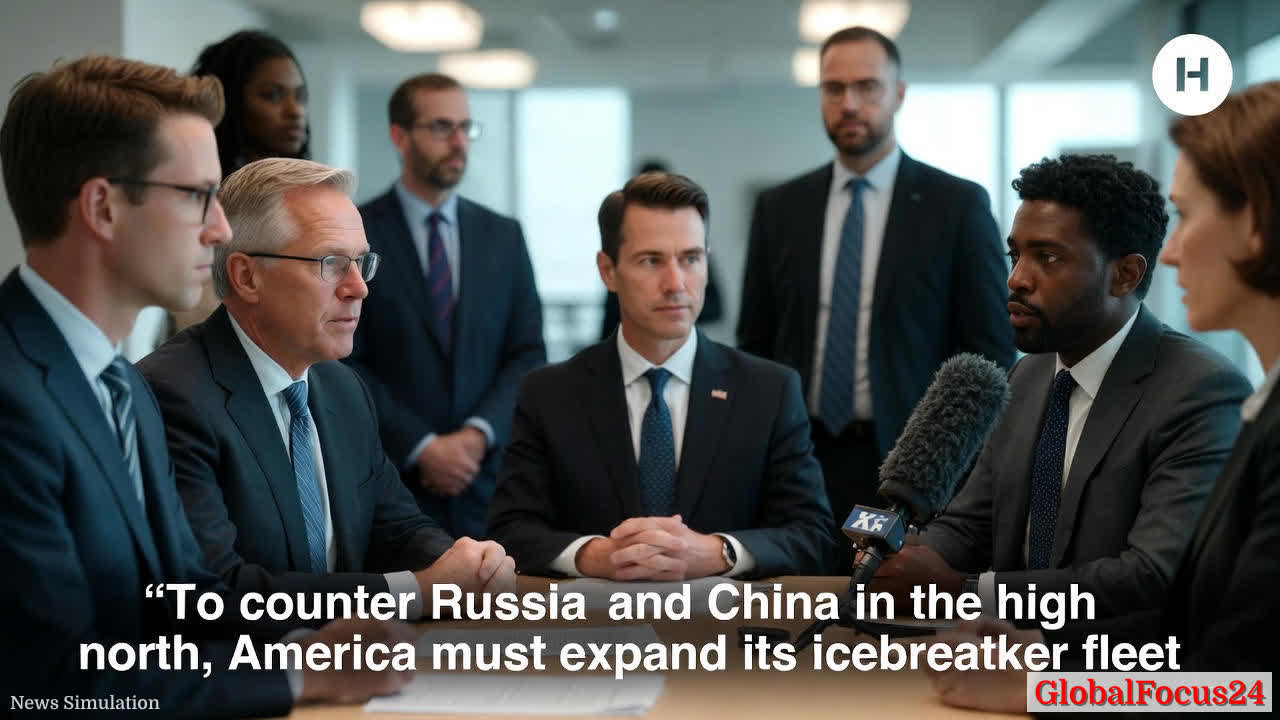
In a decisive bid to curb the expanding influence of Russia and China in Arctic waters, government planners are advancing a bold plan to expand the regional icebreaker fleet. The initiative prioritizes rapid collaboration with Finland, tapping its long-standing expertise in hull design, engine technology, and vessel maintenance to accelerate construction and strengthen maritime capabilities in the high north. The move signals a broader commitment to Arctic resilience, commercial accessibility, and regional stability as climate change reshapes sea routes and economic opportunity.
Historical context and the shifting Arctic landscape
The Arctic has long been a crossroads of international rivalries and strategic interests. Historically, sea ice limited navigation to seasonal windows, ceding control to coastal nations with robust ice-operational capacities. Over the last two decades, retreating ice has opened new corridors year-round, particularly along the Northern Sea Route, the Northwest Passage, and increasingly favorable channels between Greenland, Canada, and northern Europe. This transformation has intensified competition among Arctic stakeholders and global powers seeking to secure resource access, tourism potential, and supply chain resilience.
Finland’s role in Arctic maritime engineering traces back to the mid-20th century, when Finnish shipyards developed specialized hull forms, ice-strengthened structures, and propulsion systems tailored to extreme conditions. Today, Finnish firms are recognized for their precision engineering, modular construction techniques, and a track record of delivering reliable vessels under demanding schedules. By aligning with Helsinki’s shipyards and design houses, the fleet expansion plan seeks to transfer expertise, reduce build times, and ensure that new icebreakers meet evolving operational requirements in a warming Arctic.
Economic impact and strategic dimensions
Expanding the icebreaker fleet carries multiple economic implications. First, enhanced ice-breaking capacity supports year-round commerce by safeguarding key sea routes for energy shipments, mining exports, and agricultural imports. A more reliable Arctic corridor reduces exposure to weather-related disruptions, contributing to lower insurance costs, more predictable delivery schedules, and improved competitiveness for northern industries. Second, icebreakers function as multi-use platforms, capable of supporting search-and-rescue missions, environmental monitoring, and scientific research. The broader utility of a larger fleet translates into job creation, steady demand for shipyards, equipment suppliers, and maintenance services, and stronger regional fiscal resilience through associated revenue channels.
From a macroeconomic perspective, the initiative aligns with regional growth trajectories that stress resilience and diversified logistics. By diversifying beyond traditional southern gateways, the Arctic economy can absorb shocks from climate variability, geopolitical tensions, and global supply chain fluctuations. This diversification is particularly relevant for energy export routes, where secure, weather-resilient passage reduces the risk of costly bottlenecks. The plan also dovetails with investments in port facilities, inland logistics, and climate-adaptation infrastructure that support a broader economic ecosystem across northern regions.
Regional comparisons and collaboration opportunities
Several Arctic players have pursued similar capabilities, but the Finland-led approach stands out for its emphasis on modular construction and rapid deployment. Neighboring Nordic nations, along with Canada and Russia, have invested in ice-oriented capabilities, though with varying degrees of integration into civilian and commercial networks. The proposed collaboration with Finland could yield several advantages:
- Accelerated construction timelines: Finnish shipyards employ scalable production lines and standardized modules that can shorten vessel delivery times without compromising safety or performance.
- Technical cross-pollination: Joint engineering programs can share best practices in hull strength, propulsion efficiency, and ice-management systems, enhancing overall fleet reliability.
- Maintenance and lifecycle efficiency: A modular approach facilitates easier upgrades, component recycling, and long-term cost containment through predictable maintenance cycles.
- Regional stability and interoperability: A shared technical platform supports smoother joint operations, training, and potential multinational missions in crisis scenarios or search-and-rescue operations.
Beyond the Arctic Circle, global demand for reliable navigation through ice-prone waters is growing. Global shipping companies increasingly seek predictable routes that bypass longer southern circumventions, especially during peak seasons of ice formation. An expanded fleet that can operate across diverse weather and ice conditions enhances the Arctic’s role as a dependable transit corridor, with downstream effects on commodity pricing, insurance markets, and investment in northern infrastructure.
Operational considerations and technology outlook
The modernization effort emphasizes performance, safety, and environmental stewardship. Contemporary icebreakers are designed to break through multi-year ice, maneuver with precision in crowded harbors, and operate in challenging weather with reduced emissions. Core design priorities include hull resilience, propulsion redundancy, maneuverability at low temperatures, and integrated rescue capabilities. The collaboration with Finnish partners is expected to emphasize:
- Advanced hull forms and ice class ratings that maximize breakthrough efficiency while minimizing energy consumption.
- Hybrid or alternative-fuel propulsion options to reduce greenhouse gas emissions and improve overall environmental performance.
- Sensor networks and data analytics that enable real-time ice monitoring, weather forecasting, and route optimization.
- Enhanced crew facilities and training programs to sustain high readiness levels in remote Arctic conditions.
Public reaction and policy alignment
Public response to the expansion plan is mixed but largely supportive when framed around economic vitality, national security, and climate resilience. Community voices in northern regions emphasize the benefits of improved supply chains, job opportunities, and greater visibility on the global stage. Critics, however, call for rigorous environmental safeguards, transparent governance, and clear timelines to avoid overextension. Policymakers are responding with oversight mechanisms, funding allocations, and environmental impact assessments designed to balance growth with sustainable practices.
Operationalizing the collaboration with Finland requires a phased approach. An initial phase focuses on knowledge transfer, joint design reviews, and pilot projects to validate construction methodologies. A second phase would scale up production, secure financing, and establish supply chain logistics for components and skilled labor. A final phase would see the fleet fully commissioned and integrated into national and regional maritime operations, with ongoing performance evaluation and continuous improvement cycles.
Long-term resilience and global context
As climate dynamics continue to reshape the Arctic, a robust icebreaker fleet serves as a strategic asset for resilience. A capable fleet enables faster response to environmental incidents, supports maritime safety operations, and reinforces sovereignty objectives by ensuring predictable navigation in critical passages. The Finnish partnership has the potential to become a model for regional cooperation, combining proven industrial excellence with strategic foresight. In the broader global context, the Arctic is increasingly viewed as a collaborative space where scientific research, commercial activity, and environmental stewardship intersect. A well-designed icebreaker program can help maintain open, safe, and economically viable Arctic waterways while inviting beneficial partnerships across borders.
Conclusion: charting a sustainable and prosperous Arctic future
The push to expand the icebreaker fleet, anchored by a rapid collaboration with Finland, reflects a strategic response to a rapidly changing Arctic. By strengthening maritime capabilities, the plan aims to secure essential trade routes, support northern communities, and attract investment into Arctic infrastructure and related industries. While the endeavor faces technical, environmental, and governance challenges, deliberate planning, transparent oversight, and a commitment to sustainable design can help ensure that the Arctic remains a region of opportunity rather than contention. As sea ice dynamics shift, a modernized, well-coordinated icebreaking fleet stands as a cornerstone of Arctic security, economic resilience, and regional cooperation in the years ahead.