Scientists Reconstruct Three Million Years of Ocean Heat, Illuminating the Origins of Earth’s Great Ice Ages
Rewriting Earth's Thermal Past
An international team of climate scientists has unveiled the most detailed reconstruction yet of global ocean heat content spanning the past three million years—a timeline that captures the dramatic shift from Earth’s relatively warm Pliocene epoch to the glacier-dominated Pleistocene world. Using noble gas isotopes preserved in Antarctic ice cores, researchers have pieced together a global picture of ocean temperature change, shedding new light on how Earth’s climate system reorganized during the transition into the planet’s recurring ice ages.
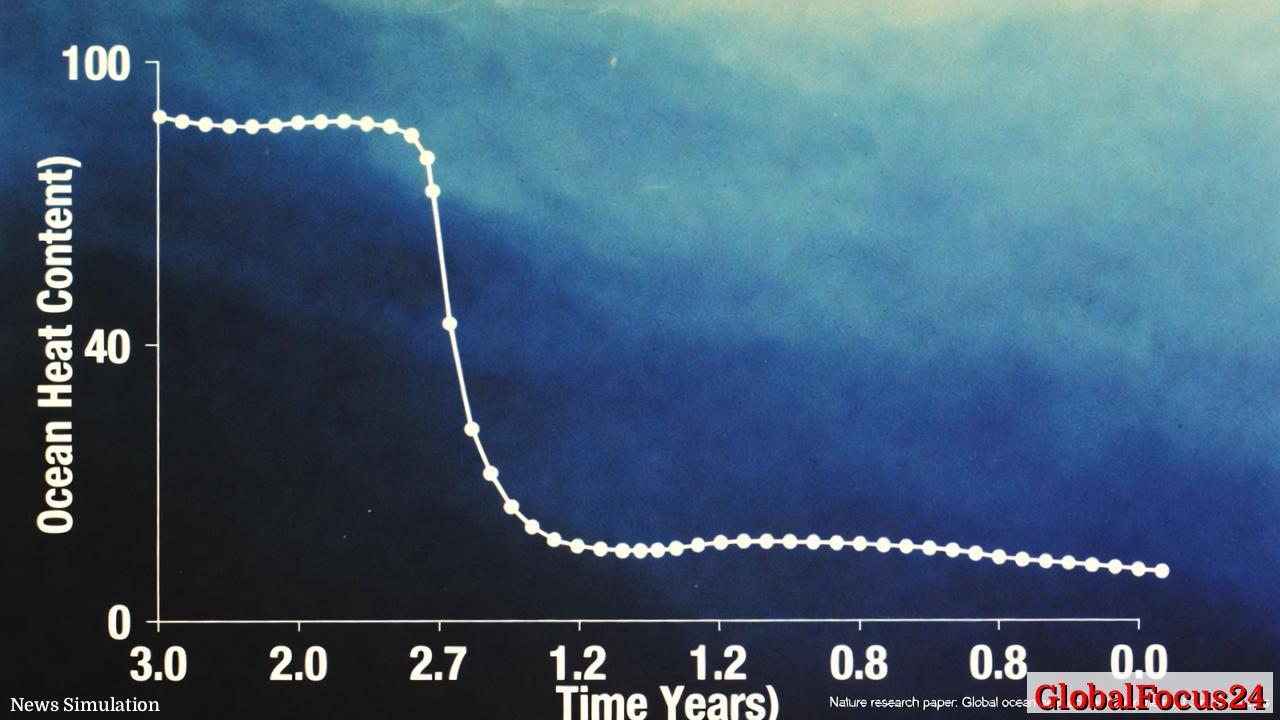
The reconstructed record pinpoints a pronounced cooling event about 2.7 million years ago, coinciding with the Plio-Pleistocene Transition—a period that marked the onset of large, permanent Northern Hemisphere ice sheets and the beginning of recurring glacial cycles. The study also reveals an unexpected steadiness in ocean temperatures during the Mid-Pleistocene Transition, between roughly 1.2 and 0.8 million years ago, even as glacial cycles became longer and more severe.
Together, these findings deepen scientific understanding of how variations in ocean heat storage, circulation, and ice volume shaped Earth’s climatic evolution over multimillion-year timescales.
A New Way to Read the Ancient Ocean
The key to the team’s reconstruction lies in a subtle yet powerful method: measuring the ratio of xenon to krypton in air bubbles trapped within Antarctic ice cores. These noble gases dissolve in seawater in proportion to temperature, meaning their relative concentrations in ancient air can act as a thermometer for past ocean conditions.
By analyzing ice cores extending across multiple glacial-interglacial cycles, scientists derived mean global ocean temperatures reaching back to the late Pliocene epoch. This approach offers a rare, continuous record that bypasses many of the uncertainties tied to more localized ocean sediment proxies or biological indicators.
“Our results provide the first direct measure of long-term ocean heat evolution, capturing both surface and deep ocean changes through time,” one of the researchers explained. “This allows us to see how Earth’s energy balance evolved as ice sheets grew and retreat patterns changed.”
The noble gas method complements traditional techniques using benthic foraminiferal oxygen isotopes—a mainstay of paleoclimate studies. Yet compared with isotope proxies, which blend ice-volume and temperature signals, the noble gas record isolates changes directly tied to global mean ocean temperature. This separation enabled the team to refine previous estimates of ice sheet expansion, revealing clearer patterns of global energy redistribution.
Cooling the Planet: The Plio-Pleistocene Transition
Around 2.7 million years ago, Earth underwent one of the most profound cooling events in its geological history. Prior to that time, global mean temperatures were consistently several degrees warmer, and the Arctic Ocean often remained ice-free during summer months. CO₂ levels were also higher, stabilizing coastal ecosystems in regions that are now glaciated.
The newly reconstructed data confirm that this era of warmth gave way to a rapid thermal decline across both surface and deep oceans. Cooling intensified global temperature gradients, strengthening ocean stratification and likely altering patterns of heat transport between latitudes.
As this change unfolded, large-scale glaciation expanded in North America and Eurasia, announcing the beginning of the Pleistocene epoch. The newly grown ice sheets increased Earth’s reflectivity, further amplifying cooling through feedback loops. Scientists describe this shift as a critical turning point when the climate system locked into an “ice age mode” for the first time in millions of years.
Ocean Heat and the Mid-Pleistocene Mystery
If the Plio-Pleistocene Transition marked the beginning of the ice ages, the Mid-Pleistocene Transition (MPT) defined their transformation. Between 1.2 and 0.8 million years ago, glacial cycles—once lasting about 41,000 years—began to stretch to nearly 100,000 years. The planet’s rhythm shifted from predictable to erratic, with deeper, longer cold intervals punctuated by shorter, intense warm periods.
Surprisingly, the new ocean temperature record shows that mean ocean heat content remained relatively steady through this transition. The contrast between the stability of average ocean temperatures and the amplification of glacial cycles implies that climatic reorganization was less about total energy changes and more about where that energy resided within the ocean–atmosphere system.
Researchers point to internal ocean processes as the likely explanation. Changes in deep water formation in the North Atlantic and Southern Ocean may have redistributed heat vertically, storing warmth at intermediate depths while surface layers cooled. This reorganization could have delayed melting during warmer phases, allowing ice sheets to persist and grow thicker over successive cycles.
Global Signals and Divergent Regional Trends
While global mean ocean temperatures declined over the past three million years, regional patterns varied dramatically. Sea surface temperature reconstructions from tropical and subtropical cores show a gradual cooling trend punctuated by abrupt drops during major glaciations. In contrast, polar regions experienced amplified swings, reflecting rapid feedbacks between sea ice, albedo, and atmospheric moisture transport.
The Antarctic data also show instances when subsurface layers warmed while surface waters cooled—a phenomenon consistent with stronger stratification and reduced upwelling. This suggests that deep-ocean heat was trapped below, unable to ventilate to the surface, reinforcing glacial persistence even when global CO₂ levels fluctuated modestly.
These interactions between ocean layers underscore why mean temperature alone cannot explain glacial cycle dynamics. Instead, the structure of ocean circulation—particularly the balance between deep and surface reservoirs—played a central role in determining climate sensitivity to orbital forcing and greenhouse gas changes.
Insights into Ice Sheet Growth and Energy Balance
By combining the noble gas-derived temperature curve with benthic oxygen isotope records, the research team was able to deconvolve signals related to temperature from those representing global ice volume. The refined analysis indicates that total ice mass increased steadily through the MPT, contributing more strongly to sea-level variability than previously estimated.
This finding implies that the overall cooling of the oceans during the earlier Plio-Pleistocene Transition laid the groundwork for larger, more stable ice sheets to form later. Once established, their sheer mass reshaped continental landscapes, altered weathering patterns, and influenced global carbon cycling through the burial of organic material and reduced atmospheric CO₂ levels.
Such coupling between oceanic heat dynamics and cryospheric expansion highlights the intricate feedbacks that govern Earth’s climate stability. Even minor shifts in ocean circulation can propagate through the system, modulating ice extent, sea level, and atmospheric composition over hundreds of thousands of years.
Broader Context and Present-Day Implications
The new reconstruction contributes to an expanding effort to contextualize modern climate change within Earth’s long-term thermal history. During most of the past three million years, the planet oscillated between cold glacial and warmer interglacial phases, driven by relatively small variations in solar energy distribution. However, the pace and scale of current ocean heat uptake differ sharply from natural precedents.
Today, global ocean heat content is rising at a rate unmatched in the geological record. Modern warming is concentrated in the upper 2000 meters of the ocean, causing widespread coral bleaching, accelerated ice melt, and thermal expansion that drives sea-level rise. Understanding how ancient oceans stored and released heat offers a key baseline for evaluating these ongoing changes.
Comparatively, past cooling took hundreds of thousands of years to unfold. The reconstructed three-million-year record demonstrates how slowly the climate system typically adjusted to external forcing. In contrast, human-driven warming since the Industrial Revolution has altered global heat distribution in less than two centuries.
Regional Comparisons: Lessons from Ancient Oceans
Across Earth’s history, the Southern Ocean has emerged as a recurring focal point for heat exchange regulation. Its waters act as a gateway between the deep ocean and atmosphere, controlling CO₂ outgassing and deep water renewal. The noble gas temperature record derived from Antarctic ice thus provides a particularly sensitive indicator of global climate shifts.
In the North Atlantic, evidence from sediment cores aligns with this new reconstruction, showing parallel cooling trends but differing magnitudes. The contrast between hemispheres reveals how regional mechanisms—such as the Atlantic Meridional Overturning Circulation (AMOC)—can amplify or mute global signals. During glacial periods, a weakened AMOC likely trapped heat in the Southern Hemisphere’s deep ocean, delaying global-scale recovery from ice ages.
Understanding these regional imbalances is vital to interpreting modern trends. Present-day changes in the AMOC and Southern Ocean stratification may carry echoes of ancient reconfigurations, suggesting that past transitions could foreshadow future climate tipping points.
A Window into Earth’s Climate Machinery
The reconstruction of three million years of ocean heat content marks a milestone in paleoclimatology. It not only confirms the central role of the oceans in pacing ice age rhythms but also refines how scientists interpret interconnected factors—temperature, ice volume, circulation, and carbon storage—that regulate the planet’s energy balance.
Just as the oceans once held the key to the cooling that birthed Earth’s great ice sheets, they now anchor the warming that defines the Anthropocene. By reading the oceans’ ancient memory locked in air bubbles and sediments, researchers are learning how delicate yet resilient Earth’s climate machinery truly is—and how humanity’s future may depend on understanding the deep past.