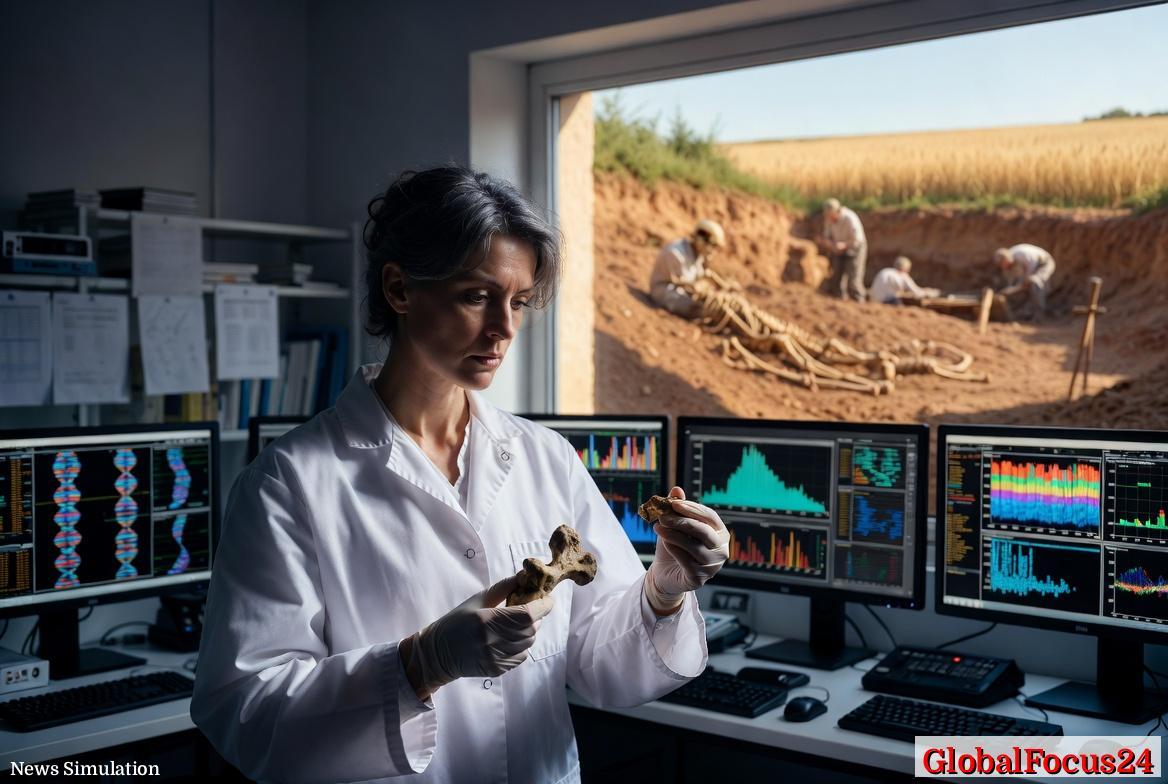
Ancient DNA Study Reveals Rapid Human Evolution Driven by Natural Selection Over the Last 10,000 Years
A sweeping new analysis of ancient human DNA is reshaping scientific understanding of how recently and extensively natural selection has shaped modern populations. Drawing on genetic data from more than 15,000 individuals who lived across western Eurasia over the past 10,000 years, researchers have identified hundreds of genetic variants that rose or fell sharply in frequency, signaling powerful evolutionary pressures well into relatively recent human history.
The findings challenge long-standing assumptions that human evolution slowed dramatically after the emergence of modern Homo sapiens. Instead, the study shows that genetic adaptation accelerated during key cultural transitions, particularly with the rise of agriculture, fundamentally altering traits linked to immunity, metabolism, and physical characteristics.
Large-Scale Ancient DNA Analysis Unlocks New Insights
The research stands out not only for its conclusions but also for its scale. By compiling genomes from thousands of ancient individuals spanning the end of the Ice Age through the Bronze Age, scientists created one of the most comprehensive datasets ever assembled for studying human evolution.
Previous studies of ancient DNA often struggled to distinguish true signals of natural selection from other genetic changes caused by migration or random variation. This new work overcame those limitations through advanced computational methods that isolate directional selection—the process by which advantageous genetic variants rapidly increase in frequency, while harmful ones decline.
The results revealed 479 genetic variants that experienced strong selection pressures, far exceeding the relatively small number previously identified. This suggests that evolutionary change in humans has been both widespread and continuous, rather than rare and isolated.
Agriculture Marked a Turning Point in Human Evolution
One of the most striking patterns observed in the study is a sharp increase in selection following the transition from hunter-gatherer societies to agricultural communities around 10,000 years ago.
This shift introduced profound environmental and lifestyle changes, including:
- Diets increasingly based on domesticated crops and animals.
- Higher population densities in settled communities.
- Greater exposure to infectious diseases.
- New patterns of physical activity and labor.
These changes created new evolutionary pressures that favored genetic adaptations suited to farming life. Variants linked to metabolism, nutrient processing, and immune defense became especially important as humans adjusted to diets rich in grains and to the spread of pathogens in crowded settlements.
The acceleration of natural selection during this period underscores how cultural innovation can directly influence biological evolution, a dynamic that continues to shape human populations today.
Immune System Adaptations Reflect Disease Pressures
Among the most prominent findings are genetic changes related to immunity. As humans began living in closer proximity to one another—and to domesticated animals—the risk of infectious disease rose dramatically.
The study identified variants associated with resistance to major historical diseases, including tuberculosis and plague. These genetic changes likely provided survival advantages during outbreaks, allowing individuals with protective traits to pass them on more frequently.
At the same time, some immune-related variants may have come with trade-offs. Increased immune sensitivity, while helpful in fighting infections, can also raise the risk of autoimmune conditions. This balance between protection and vulnerability highlights the complex nature of evolutionary adaptation.
Physical Traits Shaped by Environment and Lifestyle
The analysis also revealed selection acting on visible physical traits, including skin pigmentation and hair characteristics. Variants associated with lighter skin became more common in certain regions, likely reflecting adaptation to lower sunlight levels and the need for efficient vitamin D synthesis.
Hair-related traits, such as reduced likelihood of male-pattern baldness, also showed evidence of selection. While the exact drivers behind these changes remain under investigation, they may relate to a combination of environmental factors and social or sexual selection.
These findings illustrate how human appearance has continued to evolve in response to both ecological conditions and cultural dynamics.
Metabolism and Body Composition Under Selection
Beyond visible traits, the study highlights significant evolutionary changes in metabolism and body composition. Variants affecting how the body processes fats, sugars, and other nutrients appear to have been strongly influenced by the shift to agricultural diets.
In hunter-gatherer societies, energy intake was often unpredictable, favoring genetic traits that supported efficient energy storage. In contrast, farming introduced more stable—but sometimes less diverse—food sources, prompting different metabolic adaptations.
Changes were also observed in traits related to physical performance, including walking speed and overall body structure. These may reflect adaptations to new forms of labor associated with farming and settlement life.
Complex Traits and Polygenic Selection
One of the more nuanced aspects of the research involves polygenic traits—characteristics influenced by many genes working together. The study found evidence that groups of genetic variants collectively shifted in frequency, affecting traits that are complex and multifaceted.
Some of these traits have been linked in modern research to cognitive and social outcomes, though interpreting such findings remains challenging. Researchers emphasize that these changes likely reflect broad biological adaptations rather than simple or direct influences on behavior or intelligence.
The identification of polygenic selection signals marks an important advance in understanding how evolution shapes traits that cannot be traced to a single gene.
Rise and Fall of Genetic Variants Over Time
Interestingly, not all selected variants followed a simple upward trajectory. Some increased in frequency during certain periods before declining later, suggesting that evolutionary advantages can shift as environments change.
For example, a genetic variant that provides protection against a specific disease may become less beneficial—or even harmful—if that disease disappears or if living conditions improve. This dynamic pattern underscores the fluid nature of natural selection, which continually responds to changing ecological and cultural contexts.
Such reversals also highlight the importance of studying ancient DNA, as modern populations alone cannot capture the full history of genetic change.
Regional Patterns Across Western Eurasia
The study focused on western Eurasia, encompassing Europe and parts of the Middle East, regions that experienced early and widespread adoption of agriculture. While many selection patterns were shared across these areas, regional differences also emerged.
Populations in different environments faced distinct challenges, from climate variations to local disease landscapes. As a result, certain genetic adaptations became more prominent in specific regions.
Comparisons with other parts of the world, such as East Asia or sub-Saharan Africa, suggest that while the overall process of recent human evolution is global, the specific traits under selection can vary significantly depending on local conditions.
This regional diversity reinforces the idea that human evolution is not a single, uniform process but a mosaic of adaptations shaped by geography, culture, and history.
Economic and Scientific Impact of Ancient DNA Research
The rapid expansion of ancient DNA research is having far-reaching implications beyond evolutionary biology. Advances in sequencing technology and data analysis are driving growth in biotechnology sectors, with applications ranging from medical research to ancestry testing.
Understanding how genetic variants evolved in response to past environments can also inform modern healthcare. For example, insights into immune system evolution may help explain current patterns of disease susceptibility, while knowledge of metabolic adaptations could influence nutritional science.
The economic impact extends to academic institutions, research funding, and private industry, as demand for genomic expertise continues to rise. This growing field is reshaping how scientists approach questions about human history and health.
Rethinking Human Evolution in the Modern Era
The findings from this large-scale study fundamentally alter the narrative of human evolution. Rather than a process that largely concluded tens of thousands of years ago, evolution appears to have remained active and responsive throughout the development of complex societies.
The transition to agriculture, urbanization, and new technologies did not insulate humans from natural selection. Instead, these changes created new pressures that drove genetic adaptation at a pace previously underestimated.
By revealing how deeply intertwined culture and biology are, the research provides a more dynamic view of human history—one in which evolution continues to shape populations in subtle but significant ways.
As more ancient genomes are analyzed and new methods are developed, scientists expect further discoveries that will refine understanding of how humans have adapted to an ever-changing world.