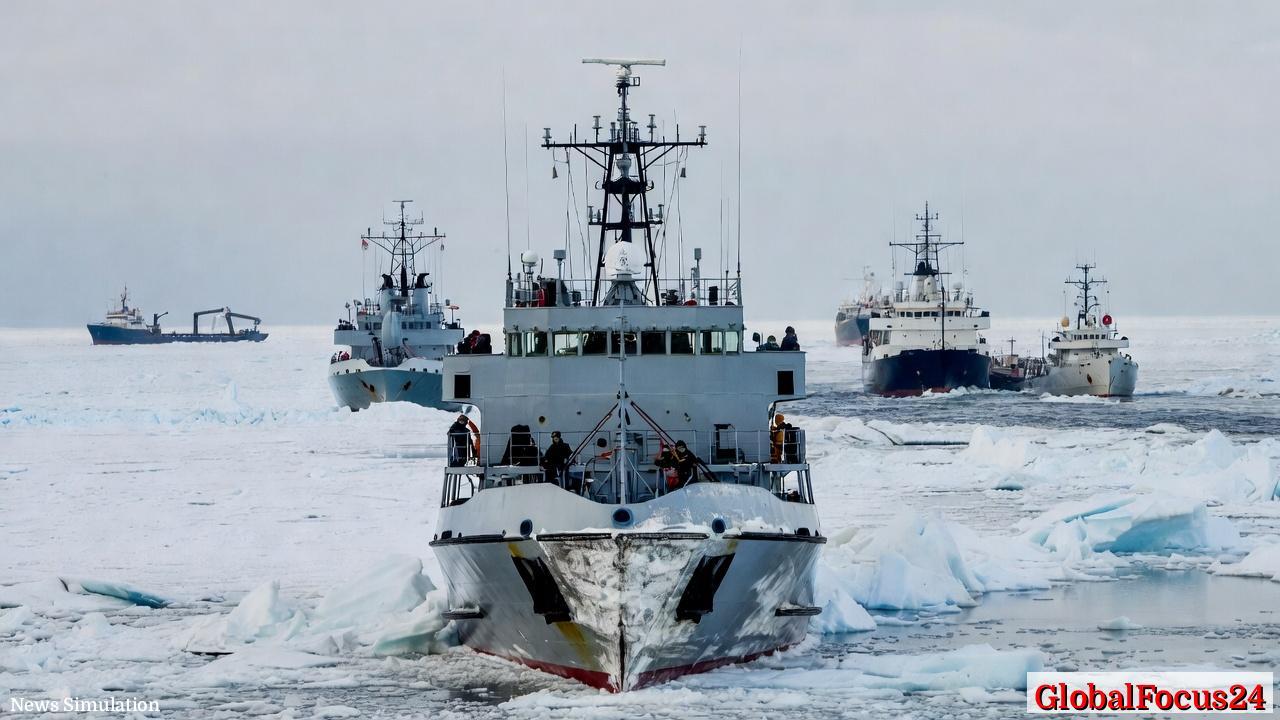
To counter Russia and China in the high north, America must expand its icebreaker fleet. To do so quickly, it will need Finland’s help.
A strategic imperative takes shape in Arctic waters as nations reconfigure their security, trade routes, and scientific ambitions around increasingly accessible sea routes. The United States is fast approaching a turning point where naval propulsion, logistics, and diplomatic partnerships converge. The expansion of the U.S. icebreaker fleet, with Finland playing a pivotal role, stands out as a practical, nonpartisan path to maintaining access, safeguarding maritime commerce, and sustaining scientific discovery across the circumpolar region.
Historical context: icebreakers and Arctic ambition The Arctic has long posed a litmus test for naval innovation and international collaboration. In the early 20th century, nations pressed for ships that could slice through ice-packed seas to reach remote communities, secure supply lines, and enable reconnaissance. The mid-century era saw a transition from local, semi-ice-capable vessels to purpose-built icebreakers, reflecting broader shifts in defense posture and global trade. The United States, Russia, Canada, and Nordic countries invested in fleets designed to operate in challenging polar environments, recognizing that control of northern sea lanes could influence energy supply, fisheries, and geopolitical influence.
The modern Arctic has intensified these dynamics. Seasonal sea ice retreat has altered navigation patterns, opening shorter, commercially viable windows for trans-Arctic shipping. With climate change accelerating ice melt in some areas while thickening in others, the need for robust, capable icebreaking assets has become a core element of national resilience. Finland’s contribution to this story—through its advanced ice technology, skilled shipyards, and extensive Arctic operations—offers a model of efficiency and practical collaboration that aligns with U.S. strategic interests without compromising regional stability.
Economic impact: icebreakers as force multipliers for commerce and science Icebreakers are not merely symbols of national prowess; they are essential tools that unlock economic opportunities across multiple sectors. In the Arctic, the ability to clear waterways rapidly reduces delays for shipments of commodities, construction materials, and consumer goods destined for remote markets. Regular icebreaking service supports port efficiency, reduces fuel consumption and emissions by avoiding detours, and stabilizes insurance and risk calculations for maritime operators working in high-latitude regions.
For resource development, icebreakers enable timely access to exploration sites, drilling platforms, and seasonal infrastructure buildouts. When ice management is reliable, energy projects can align with favorable construction windows, lowering overall project costs and increasing the likelihood of on-time completions. The broader value chain benefits communities near Arctic hubs by sustaining jobs, spurring local procurement, and maintaining critical supply lines for residents.
Scientific research represents another crucial economic dimension. Arctic expeditions rely on icebreakers to deploy research stations, transport equipment, and move personnel to field sites. Data gathered during these missions informs weather forecasting, climate models, oceanography, and ecosystem studies. The knowledge generated supports industries from agriculture to aviation, where Arctic weather patterns and sea-state conditions affect planning and safety.
Regional comparisons underscore the practical advantages of a robust icebreaker network. Canada, with its established fleet and port infrastructure in Halifax, St. John’s, and other Atlantic chokepoints, demonstrates how reliable ice management sustains fisheries, northern communities, and cross-border commerce. Norway and Sweden maintain highly capable icebreaking capabilities that support offshore energy operations, scientific missions, and search-and-rescue duties along the Barents and Norwegian Sea corridors. Russia, despite geopolitical tensions, has built a formidable polar fleet aimed at asserting maritime access and resource control. In this regional context, the United States’ ability to mobilize a versatile, modern icebreaker force—paired with cooperative arrangements with Finland—could offer a balanced, resilient solution that complements rather than competes with nearby Arctic actors.
Finnish collaboration: technology, talent, and a practical path forward Finland’s Arctic focus has fostered a sophisticated ecosystem of shipyards, engineers, and operators who understand the unique demands of polar navigation. Finnish firms bring to the table proven hull design expertise, ice-strengthening techniques, propulsion systems capable of handling varying ice thickness, and modular approaches to vessel outfitting. This combination supports rapid construction timelines and cost efficiency, attributes that matter when a government seeks to scale its icebreaker fleet within a constrained budget.
Beyond shipbuilding, Finland’s Arctic experience offers a framework for joint operations and knowledge sharing. Multinational exercises, shared maintenance protocols, and interoperable communications systems allow crews from different nations to train together, reducing risk during missions in harsh environments. Finland can also facilitate access to specialized components and spare parts, drawing on its established supplier networks to minimize downtime and maximize vessel availability. In a broader sense, Finland’s role becomes a bridge for transatlantic collaboration, aligning American strategic objectives with Nordic practices that emphasize safety, environmental stewardship, and civil-mederal efficiency.
Operational realities: fleet needs, capabilities, and procurement challenges A modern icebreaker program requires attention to several core components: hull design, propulsion, endurance, and adaptable payloads. Contemporary icebreakers blend ice-breaking power with ice-class hull integrity, bow geometry optimized for both first-strike clearing and fuel efficiency, and modern propulsion packages that offer redundancy and reliability in remote operating theaters. For a fleet intended to operate in conjunction with U.S. Coast Guard missions, civilian-military interoperability is essential, along with robust accommodations for scientists, technicians, and humanitarian responders.
Procurement timelines pose another challenge. Icebreakers involve long lead times due to specialized fabrication processes, testing regimes, and the need for specialized crews. An accelerated path—potentially leveraging Finnish partnerships—might hinge on parallel design reviews, modular construction, and pre-negotiated maintenance and training agreements. Financing strategies could combine congressional appropriations with cost-sharing arrangements, government-to-government procurement agreements, and potential involvement from government-backed industrial consortia. Time-sensitive operational windows, such as those created by seasonal ice retreat, add urgency to establishing a capable fleet that can respond rapidly to contingencies and commercial needs.
Public safety and environmental considerations also shape fleet design. Modern icebreakers must meet stringent emissions standards, integrate cleaner propulsion options, and adhere to environmental protection requirements in ecologically sensitive Arctic waters. Communities along the northern coastlines depend on reliable icebreaking for safe passage during winter months, which in turn influences local economies, emergency response readiness, and tourism. Finland’s emphasis on sustainable engineering and strict regulatory compliance aligns with U.S. expectations for responsible stewardship of Arctic environments.
Strategic implications: deterrence, diplomacy, and regional stability An expanded American icebreaker capability has multiple strategic implications beyond immediate operational readiness. First, it enhances deterrence by signaling credible capability to respond to disruptions in northern sea lanes and to uphold freedom of navigation. This is particularly relevant as adversarial actors seek to expand influence in the Arctic, working to consolidate access to critical maritime corridors and resource-rich zones. A robust icebreaker fleet helps ensure that trade routes remain open and that humanitarian and disaster response operations can be conducted efficiently in the region.
Second, a stronger icebreaker capability supports diplomatic engagement. Finland’s cooperation fosters a non-escalatory, cooperative framework for Arctic governance. It provides a platform for confidence-building measures, joint research missions, and shared surveillance and weather data. Such collaboration reduces misperceptions and fosters transparency in a region where weather conditions and ice dynamics frequently complicate military and civilian operations.
Third, regional stability benefits from predictable, cooperative arrangements. When Arctic nations have access to reliable icebreaking services, supply chains and emergency response capabilities improve, reducing the likelihood of accidents or shortages that could escalate tensions. A U.S.-Finnish partnership can serve as a model of pragmatic, non-biased collaboration that prioritizes common interests—commerce, science, safety—over confrontational postures.
Policy and funding considerations: translating accord into action Realizing an expanded icebreaker program requires a coherent policy framework and sustained funding. Key policy steps include:
- Define mission priorities: prioritize a balanced mix of national security, search-and-rescue, scientific research, and commercial support functions to ensure the fleet remains versatile across scenarios.
- Establish a joint development plan: set clear milestones for design, testing, and procurement, with Finland-based collaboration integrated into the program from the outset.
- Align with allied investments: coordinate with Canada, Norway, and other Arctic partners to avoid duplication and to maximize shared capabilities, such as satellite communications, navigation systems, and emergency response protocols.
- Secure financing mechanisms: combine federal appropriations with leveraged private investment in shipyards and technology development, and explore cost-sharing with partner nations to reduce overall burden while maintaining high standards.
- Build a talent pipeline: invest in training programs for crews, engineers, and maintenance staff, drawing on Finnish and other international expertise to accelerate readiness.
Public sentiment and regional impact Communities in northern states and territories have a direct stake in a reliable icebreaker fleet. Local economies, which depend on year-round access to maritime routes and fisheries, stand to gain from improved supply chain stability and job opportunities in shipbuilding, maintenance, and support services. Public perception often hinges on visible milestones—new vessel launches, successful joint exercises, and the consistency of icebreaking services during severe winters. Transparent communication about safety, environmental safeguards, and the tangible benefits of collaboration with Finnish partners can help build broad-based support across urban and rural constituencies.
Technological trends shaping the next generation of icebreakers Advances in propulsion and hull form are redefining what icebreakers can achieve. Hybrid-electric propulsion, integrated power systems, and advanced ice-class materials enable vessels to operate longer between refits while reducing emissions. Sensor suites and data analytics drive predictive maintenance, lowering downtime and extending vessel life. Modular ship designs facilitate upgrades to accommodate evolving scientific equipment or mission-specific payloads without requiring a full rebuild. Additionally, autonomous or semi-autonomous capabilities for support tasks and survey missions may complement crewed operations, enhancing reach and resilience in harsh Arctic conditions.
Regional implications: comparing Arctic approaches
- United States: A modern, extended icebreaker fleet provides strategic depth for national security and commercial resilience, with a strong emphasis on interoperability with allied partners and rapid response capabilities.
- Finland: A proven partner with a dense Arctic operations ecosystem, offering advanced shipbuilding, proven technology, and efficient project delivery, enabling faster ramp-up and lower life-cycle costs.
- Canada: A closely integrated Arctic framework that emphasizes sovereignty, coast guard capabilities, and port network efficiency, which can be complemented by shared European and Nordic expertise.
- Norway and Sweden: Leaders in offshore operations and environmental stewardship, providing a blueprint for sustainable ice management and integrated energy-sector collaboration.
- Russia: A significant counterweight in the Arctic, with heavy icebreaker operations that underscore the need for robust, credible alternatives from Western and allied fleets to preserve open sea lanes and reduce strategic risk. In this landscape, the United States’ collaboration with Finland emerges as a pragmatic, stabilizing force that enhances operational readiness while supporting a cooperative, rules-based approach to Arctic governance.
Conclusion: charting a pragmatic course for Arctic leadership The Arctic’s evolving dynamics demand practical, well-coordinated responses that blend security, commerce, and science. Expanding the U.S. icebreaker fleet, with Finland’s collaboration, offers a credible path to rapidly increasing capability, expanding Arctic access, and strengthening resilience in northern maritime regions. This approach emphasizes shared technology, streamlined procurement, and a forward-looking partnership that aligns American strategic interests with Nordic engineering excellence. As conditions in the high north continue to change—ice patterns shifting with the seasons, shipping volumes rising, and scientific missions expanding—the ability to navigate ice, and to do so confidently and responsibly, will define leadership in this critical theater for decades to come.