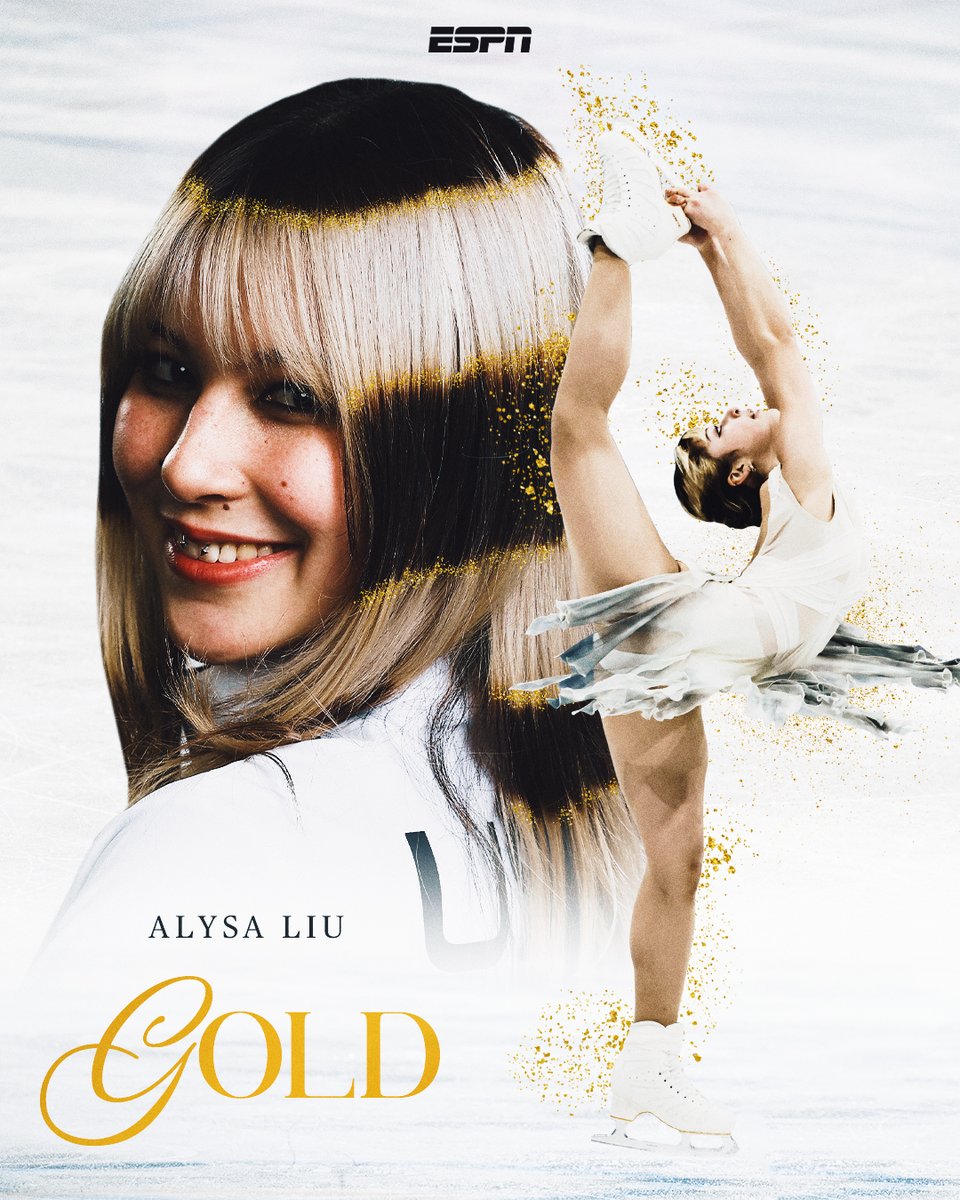
Alysa Liu Captures Gold in Women’s Figure Skating at 2026 Winter Olympics
MILAN — In a dazzling display of artistry and athletic command, American figure skater Alysa Liu clinched the gold medal in the women’s singles event at the 2026 Milano Cortina Winter Olympics, ending a 24-year gold medal drought for the United States in the discipline. Her inspired free skate to Donna Summer’s “MacArthur Park Suite” drew roaring applause from a sold-out crowd at the Milano Ice Skating Arena, sealing a career-best total score of 226.79 points and cementing her place among the sport’s modern legends.
This historic win marked a defining moment not only for Liu but for U.S. figure skating as a whole — a renaissance two decades in the making.
A Stellar Performance Seals the Victory
Liu, 20, entered the free skate in third place after a strong but cautious short program. But under the bright lights of Milan, she delivered a nearly flawless performance that captivated both judges and spectators. The only noticeable blemish came from a slight error in her flying camel spin — a small imperfection in an otherwise commanding routine.
Her technical repertoire was balanced with mature musical interpretation: a seamless cascade of triple jumps, fluid transitions, and expressive movement that bridged athleticism with emotion. It was the very embodiment of the long-awaited American comeback in women’s figure skating, blending power and poise in equal measure.
Japan’s Dominance Tested
Japan’s formidable lineup entered the free skate favored to sweep the podium. Kaori Sakamoto, the reigning world champion, claimed silver with 224.90 points, while teammate Ami Nakai earned bronze at 221.16 points after leading the short program. Both skaters delivered high-caliber routines, but minor errors — a flawed triple flip for Sakamoto and small under-rotations for Nakai — opened the door for Liu’s ascension.
A third Japanese contender, Mone Chiba, placed fourth at 217.88 points, rounding out an intensely competitive field. Amber Glenn, another U.S. skater, completed a remarkable comeback from 13th place, finishing fifth with 214.91 points after an electrifying performance that featured a rare triple Axel — a jump still seldom executed successfully by women at the Olympic level.
Ending a 24-Year Drought
Liu’s triumph ended a long standstill for the United States in one of the Olympics’ most storied events. The last American woman to win Olympic gold in singles was Sarah Hughes at Salt Lake City in 2002. Since then, the U.S. has watched a generation of champions from Japan, Russia, and South Korea dominate the sport, leaving American hopefuls striving to recapture former glory.
The nation’s last individual Olympic medal in women’s singles had come from Sasha Cohen’s silver in 2006, followed by a series of near-misses through the 2010s and 2020s. Liu’s victory thus concludes one of the longest gaps between gold medals for a major winter sport in U.S. history — and signals a possible new era for American skating.
From Retirement to Olympic Champion
Liu’s path to Olympic gold has been as unconventional as it is inspiring. At just 16, she represented the United States at the 2022 Beijing Olympics, finishing seventh as the youngest competitor in the field. Shortly after that debut, she shocked fans by announcing her retirement, citing a need to step away from the competitive grind.
Her return in 2024, following two years of full-time study at UCLA and a self-described “creative reset,” stunned the skating world. She re-entered competition reinvigorated — mentally mature, artistically focused, and, crucially, in control of her own narrative. In interviews, Liu spoke of “choosing her own destiny,” describing the process of selecting her music, choreography, and costume designs as part of reclaiming her identity as an athlete-artist.
This autonomy manifested in a triumphant return to form at the 2025 World Championships, where she captured her first world title. That win paved the way for the triumph in Milan — a culmination of personal growth and professional mastery.
A New Chapter for U.S. Skating
For American skating officials and fans, Liu’s victory offers more than gold — it provides a renewed sense of credibility and inspiration. The United States had long maintained strong showings in team events and dance disciplines but struggled to reclaim its one-time dominance in women's singles. Liu’s success, paired with the team event gold earlier in these Games, may inspire a surge in youth participation and funding.
Historically, women’s figure skating has been one of the most-watched Olympic sports in the United States, with iconic champions like Dorothy Hamill, Peggy Fleming, Kristi Yamaguchi, and Michelle Kwan serving as cultural touchstones. Liu’s win now revives that lineage, linking her name to the golden tapestry of American skating history and greasing the wheels for what could be a new golden generation.
The Influence of Artistic Freedom
Much of Liu’s breakthrough is credited to her renewed focus on artistry. In contrast to the ultra-technical programs that defined the past decade — often dominated by quadruple jump specialists from Russia and Japan — Liu’s program this season prioritized storytelling and musical nuance. Her free skate to “MacArthur Park Suite” married disco energy with balletic phrasing, offering a blend of nostalgia and modernity that resonated across generations.
Judges rewarded that style: her component scores in interpretation and choreography ranked highest in the field. Analysts have noted that this shift toward narrative expression — without sacrificing technical excellence — could influence the direction of the sport in years to come, especially as new rules continue to balance scoring between artistry and difficulty.
Global Reaction and Celebration
The crowd inside the Milano Ice Skating Arena gave Liu a standing ovation before she even completed her final spin. As her score flashed on the screen, the American contingent in the stands erupted, waving flags and chanting her name. Footage of Liu tearfully embracing her coach quickly went viral across social media platforms, drawing celebratory messages from skating legends and fellow Olympians worldwide.
The medals were awarded by Kirsty Coventry, President of the International Olympic Committee’s Athletes’ Commission, who praised the women’s event as “an unforgettable demonstration of grace under pressure.”
In cities across the United States — from San Francisco, Liu’s hometown, to ice rinks in Michigan, Colorado, and Texas — skating clubs reported surges in interest and sign-ups within hours of the event’s broadcast, echoing the post-Olympic participation booms seen after previous American victories.
Regional and Historical Context
Europe has traditionally been the arena of skating’s artistic heart, with Italy, France, and Russia cultivating deep traditions. Liu’s victory in Milan carries special symbolism in this setting — an American skater reclaiming glory on European ice, against a backdrop of fierce global competition. The host nation Italy, while not medaling in the women’s singles event this year, celebrated Liu’s artistry; local newspapers praised her program’s “musical sophistication” and “emotional fluency.”
In global comparison, Liu’s score of 226.79 places her among the top five highest-scoring women in Olympic history under the current judging system, trailing only the record-setting standard from the 2022 Games. For a discipline that evolves rapidly and rewards innovation, Liu’s performance may stand as a hallmark of balance — proof that technical innovation and emotional resonance can coexist harmoniously.
Economic and Cultural Ripple Effects
The impact of Olympic figure skating extends far beyond the rink. Major victories like Liu’s often generate significant economic benefits, from broadcasting revenue and merchandise sales to increased interest in local skating facilities. The U.S. Figure Skating Association is expected to see renewed sponsorship engagement, while regional skating clubs anticipate spikes in membership and funding.
For Milan, hosting a historic moment amplified the legacy of the city’s Winter Games. Tourism analysts estimate a short-term boost from global media coverage, with extended interest from event-driven visitors and sports fans eager to see where the 2026 magic unfolded.
In the broader cultural imagination, Liu’s success may also help bridge generational audiences — appealing to both skating traditionalists who prize elegance and new fans drawn to her contemporary, self-directed approach.
Looking Ahead
As the Olympic flame dims over Milan, Alysa Liu’s gold medal marks not just a personal triumph but a shift in figure skating’s evolving narrative. Her journey — from prodigy to retiree to world champion and now Olympic gold medalist — embodies resilience and reinvention. For the United States, it signals a long-awaited return to the top of a sport once synonymous with American excellence.
Whether she continues to compete or steps into a new role within the sport, Liu’s victory will likely serve as a defining chapter in modern skating history — a story of an athlete who found freedom, rediscovered joy, and, in doing so, brought gold back home.