Allies Turn to Beijing as Questions Grow Over U.S. Reliability
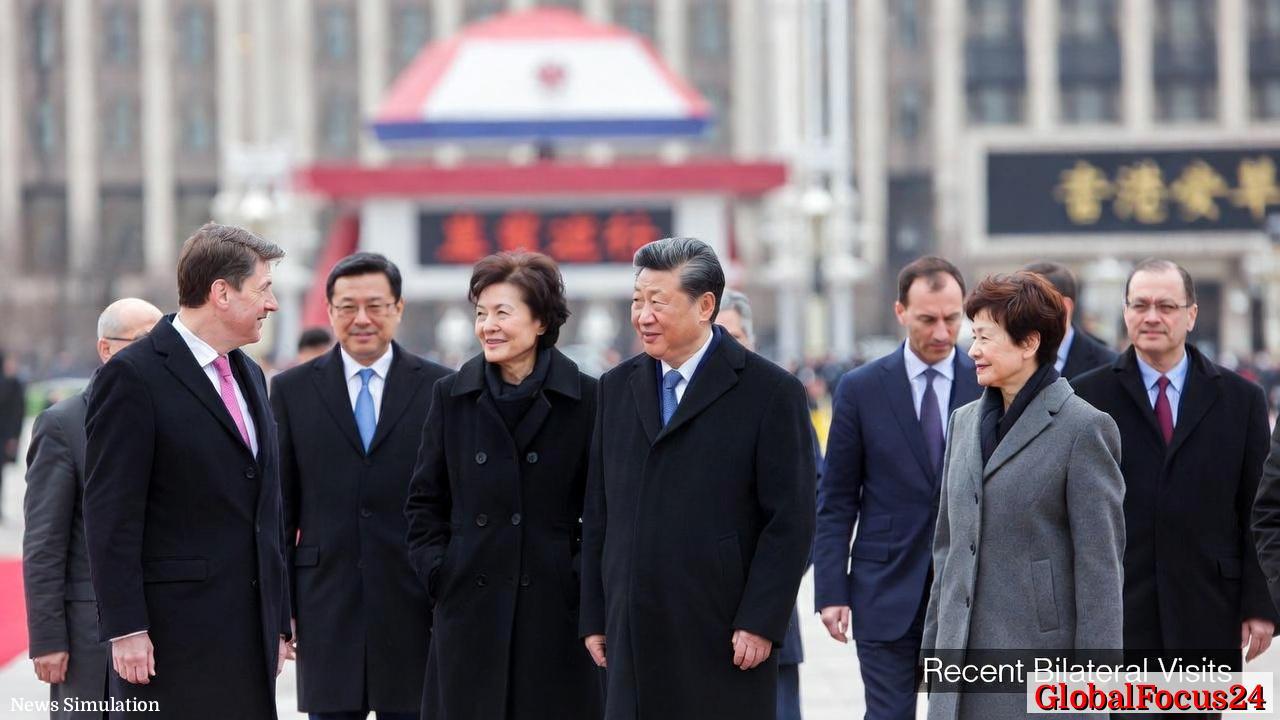
As senior officials from long-standing U.S. partners stream through Beijing’s cavernous Great Hall of the People, the optics tell a story that goes far beyond protocol and pageantry. Recent bilateral visits by key American allies to meet Chinese leader Xi Jinping are being read in capitals around the world as a powerful affirmation of China’s great‑power status and a pointed reminder of doubts surrounding Washington’s staying power and consistency as a security and economic partner.
These trips, often choreographed with public displays of warmth and repeated references to “strategic autonomy” and “multipolarity,” highlight an international system in flux. For many governments, engaging Beijing at the highest levels is no longer a diplomatic outlier or a hedge—it is becoming a core pillar of foreign policy planning in a world where the balance of influence is shifting and where the United States is perceived as more inward‑looking and less predictable.
Historical Roots of a Shifting Balance
The current wave of high‑profile visits to Beijing cannot be understood without looking back at the evolution of China’s global role over the past four decades. Since the reform and opening period that began in 1978, China has shifted from a relatively isolated, low‑income country to the world’s second‑largest economy, a transformation that has steadily translated into diplomatic and military weight.
By the early 2000s, China had emerged as a central node in global manufacturing supply chains, making it indispensable to export‑driven economies in Asia and Europe. Its accession to the World Trade Organization in 2001 accelerated this integration, prompting governments to deepen economic ties even as they maintained security relationships with Washington. That dual‑track approach—relying on the United States for defense while depending on China for growth—defined the strategic choices of many U.S. allies for nearly two decades.
The global financial crisis of 2008 further altered perceptions. While the U.S. and many European economies suffered deep recessions, China sustained relatively high growth, bolstered commodity exporters, and launched large‑scale stimulus measures at home. For many developing and middle‑income countries, this reinforced the view of China as an anchor of global demand and a potential partner in times of economic stress. Regular, high‑level exchanges with Beijing became a way to secure investment, market access, and political support in multilateral forums.
Over time, China’s growing involvement in infrastructure, technology, and finance—through initiatives such as large cross‑border rail projects, digital connectivity agreements, and energy investments—created new layers of dependence and influence. The result today is a landscape in which meetings with Xi Jinping are not merely ceremonial but are key milestones in long‑term strategic planning for a wide array of states, including those that remain formally aligned with Washington.
The Perception Gap: U.S. Reliability Under Scrutiny
While China’s rise has been gradual and cumulative, perceptions of American reliability have undergone sharper swings. Debates in Washington over alliance commitments, burden‑sharing, and overseas interventions have periodically raised questions among partners about how durable U.S. promises really are. Changes in administrations, coupled with sharp shifts in tone on trade, defense spending, and international agreements, have amplified that sense of uncertainty.
Some U.S. allies have watched closely as Washington has alternately championed and then withdrawn from major international accords in areas such as climate, trade, and arms control. Sudden policy reversals, domestic political gridlock, and contested election outcomes have collectively fed a narrative of volatility. Although the U.S. retains formidable military capabilities and remains central to the global financial system, the predictability that once underpinned its alliances is now less taken for granted.
This perception gap does not mean allies are abandoning their security relationships with the United States. Rather, it is pushing them to diversify partnerships, reduce over‑reliance on any single power, and keep diplomatic lines open to Beijing even on contentious issues. The recent uptick in high‑level visits to China—often involving countries that host U.S. forces, participate in joint exercises, or share intelligence with Washington—captures this subtle but significant recalibration.
Economic Stakes: Trade, Investment, and Supply Chains
Economics is a central driver of the renewed focus on Beijing. For many U.S. allies, China is not only a major export market but also a key buyer of commodities, an important source of tourists and students, and a critical link in complex supply chains for electronics, autos, and consumer goods. High‑level visits often include extensive business delegations and parallel forums for corporate leaders seeking contracts and partnerships.
Several themes stand out in these economic engagements:
- Governments are trying to secure or expand access to the Chinese market for their manufacturers, agricultural producers, and service industries.
- Officials are seeking assurances on supply‑chain stability, especially in sectors such as semiconductors, batteries, and medical equipment where disruptions have proven costly.
- There is a growing interest in Chinese investment in infrastructure, clean energy, and digital connectivity, particularly in regions where domestic resources and Western financing are constrained.
At the same time, allies are weighing the risks associated with over‑dependence on a single market and the tensions between commercial opportunity and national security concerns. Export controls, technology restrictions, and screening of foreign investments—often initiated or encouraged by Washington—have complicated this calculus, prompting capitals to look for nuanced ways to protect sensitive sectors while keeping broader trade and investment flows open.
Against this backdrop, engagement with Xi is as much about managing risk as it is about seizing opportunity. Leaders seek to signal openness to economic cooperation, clarify red lines on critical technologies, and prevent political disputes from spilling over into trade disruptions or informal sanctions. The frequency and visibility of these visits underscore how central China has become to global economic planning, even among governments that continue to align strategically with the United States.
Regional Dynamics in Asia and Europe
The surge of visits also reflects specific regional dynamics, particularly in Asia and Europe. In East and Southeast Asia, U.S. allies face the dual reality of deep economic integration with China and growing security concerns in nearby seas and along contested borders. High‑level trips to Beijing allow these governments to press their case on maritime issues, push for crisis‑management mechanisms, and explore confidence‑building measures, even as they maintain robust defense cooperation with Washington.
In Europe, the calculus is somewhat different but no less complex. Many European allies view China simultaneously as a partner, competitor, and systemic rival. They seek to cooperate on climate policy, pandemic preparedness, and global development while guarding against undue dependence in strategic sectors and responding to domestic concerns about human rights and industrial competitiveness. Bilateral visits to Beijing provide an opportunity to keep communication channels open, advocate for national commercial interests, and project an image of strategic autonomy from both Washington and Beijing.
Across both regions, leaders are acutely aware that their diplomatic choreography will be closely scrutinized. Public messaging around these visits typically emphasizes dialogue, stability, and mutual respect. The tone tends to avoid explicit criticism of either major power, reflecting a desire to avoid being drawn into a binary choice between the United States and China. This balancing act has become a defining feature of contemporary diplomacy, and recent trips to Beijing are a visible manifestation of that broader trend.
Domestic Audiences and Political Optics
Bilateral visits to Beijing are not aimed solely at foreign audiences; they also play an important role in domestic politics within U.S. allied countries and within China itself. For leaders from U.S. partner states, being seen alongside Xi can signal diplomatic clout, economic pragmatism, and an ability to navigate a more contested international environment. In some cases, it allows governments to demonstrate that they are pursuing diversified foreign policies that look beyond traditional Western frameworks.
Public opinion in many of these countries is nuanced. Citizens may harbor concerns about China’s political system, its human rights record, or its regional ambitions, yet still support engagement that promises jobs, investment, and stability. Leaders must therefore calibrate their public statements carefully—emphasizing national interests, economic benefits, and the importance of dialogue while being attentive to domestic sensitivities.
For Beijing, hosting a steady stream of high‑level delegations offers a chance to project confidence and legitimacy at home. State media coverage of these meetings typically highlights China’s role as a responsible major power, emphasizes themes of win‑win cooperation, and portrays foreign visitors as affirming China’s international stature. The images of Xi Jinping holding court with leaders from advanced economies and key regional players reinforce a narrative of China at the center of global diplomacy.
Great‑Power Signaling and Strategic Autonomy
Beyond specific deals and communiqués, the symbolism of these visits matters. Every handshake, joint statement, and red‑carpet ceremony serves as a form of great‑power signaling. For many allies, the message they want to send is not that they are switching camps but that they are asserting strategic autonomy: they will cooperate with both Washington and Beijing where it suits their interests and avoid being locked into rigid blocs.
This approach reflects a broader shift toward a more multipolar system. Rather than aligning exclusively with a single superpower, states are increasingly building issue‑specific coalitions, pursuing flexible partnerships, and maintaining room to maneuver. Regular, high‑level contact with Xi is part of this strategy, allowing governments to understand China’s intentions, convey their own priorities, and prevent misunderstandings that could escalate into crises.
At the same time, frequent engagement with Beijing can be read internationally as a sign that China is now a central reference point in global diplomacy. Even when meetings are cordial but cautious, the fact that so many U.S. allies consider them indispensable underscores the degree to which China has consolidated its status as a great power. In contrast, lingering doubts about U.S. consistency—whether fair or exaggerated—create a space in which Beijing can present itself as a stable alternative interlocutor.
Economic and Security Trade‑Offs
The intensification of diplomatic traffic to Beijing highlights the trade‑offs that U.S. allies must manage between economic and security imperatives. On one hand, China’s market size, investment capacity, and role in critical supply chains make engagement economically attractive, even necessary. On the other, close integration with Chinese firms and institutions can raise concerns about strategic vulnerability, intellectual property, and over‑reliance on a single partner.
Many governments are responding by adopting layered strategies. They may welcome Chinese investment in certain sectors while tightening controls in others, or deepen cooperation on climate and health while aligning more closely with the United States on defense and advanced technology. High‑level visits provide a venue to negotiate these boundaries, test the feasibility of compartmentalization, and signal intentions to both major powers without committing to exclusive alignments.
This balancing becomes particularly sensitive in areas such as telecommunications, artificial intelligence, and green energy, where commercial opportunities intersect with national security concerns. As allies weigh participation in Chinese‑backed infrastructure projects or technology ecosystems, they must consider both the economic gains and the potential political leverage that could result. Their trips to Beijing are therefore part of a careful calculus that seeks to capture benefits while limiting exposure.
Looking Ahead: A More Contested Diplomatic Landscape
The growing cadence of visits by U.S. allies to meet Xi Jinping points toward a future in which diplomatic alignments are more fluid and contested. China is leveraging its economic weight and diplomatic outreach to cement its status as a central actor in global governance, regional security dialogues, and economic coordination. The United States, despite remaining a core security provider for many of these countries, faces a more crowded field in which its partners insist on broader options.
In the coming years, the pattern of bilateral engagements is likely to become even more complex. Allies may increase trilateral and minilateral formats that include both major powers, seek greater voice in shaping the rules of trade and technology, and pursue regional arrangements that dilute the dominance of any single state. High‑level visits to Beijing will remain an important tool in this more diversified diplomatic toolkit, offering governments a direct channel to influence China’s choices and gauge its responses.
For now, the image of U.S. partners lining up for meetings with Xi serves as a clear signal of where global power is perceived to be shifting. It reflects not only China’s sustained rise but also a growing conviction among many capitals that they must plan for a world in which American reliability cannot be assumed automatically. In that environment, engagement with Beijing is not merely optional—it is increasingly seen as an essential component of national strategy.