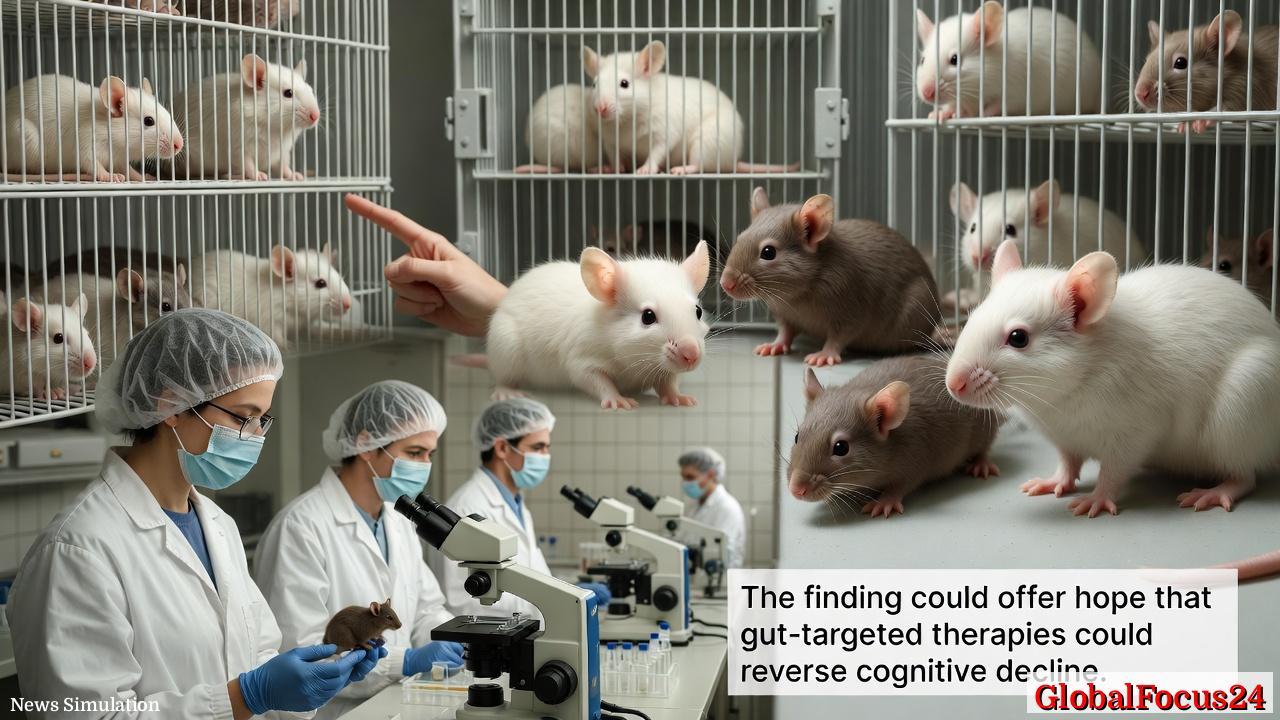
Gut Bacterium Linked to Age-Related Memory Loss in Groundbreaking Mouse Study
Discovery Reveals Hidden Link Between Gut Microbes and the Aging Brain
In a breakthrough that could reshape scientific understanding of how the human body ages, researchers have identified a specific gut bacterium that appears to trigger cognitive decline in mice as they grow older. The discovery, centered on Parabacteroides goldsteinii, suggests that changes in the microbiome may be directly responsible for interfering with the gut-brain communication system, impairing memory and cognitive performance.
For decades, scientists have examined the role of the gut microbiome in immune regulation, metabolism, and even mood. But this new research reveals an unexpectedly direct mechanism by which intestinal microbes can alter brain function through neural pathways, offering compelling evidence that aging in the gut may influence aging in the mind.
The Microbiome’s Surprising Effect on Memory
The study demonstrated that young mice exposed to the microbiomes of older counterparts began to show measurable signs of cognitive decline within weeks. When housed together for a month, the two groups exchanged gut microbes through shared food, bedding, and contact. By the end of the experiment, the younger animals performed as poorly on memory tests as their elderly cage-mates.
In object recognition tests—widely used to measure short-term memory—these young mice lost the ability to distinguish new items from familiar ones. They no longer displayed curiosity toward novel objects, mirroring the deficits typical of much older animals.
Neuroscientist Timothy Cox described the magnitude of change as “profound,” explaining that the young animals were “indistinguishable from the old mice” after their microbiomes had shifted.
Identifying the Culprit: Parabacteroides goldsteinii
Through extensive microbial analysis, researchers pinpointed Parabacteroides goldsteinii as the bacterium driving these neurological effects. When this single species was introduced into healthy young mice, their short-term memory and recognition abilities declined sharply. Conversely, when older mice were treated with antibiotics or a targeted phage therapy designed to eliminate P. goldsteinii, their memory performance rebounded. The reversal was so pronounced that treated aged mice performed on par with untreated young animals.
This unexpected result not only confirms the bacterium’s role but also highlights the possibility of therapeutic interventions—especially those focused on the gut microbiome rather than directly targeting the brain.
How the Gut Talks to the Brain
The gut-brain axis, a complex communication network linking the gastrointestinal system to the central nervous system, plays a central role in this discovery. Using neural tracing and molecular imaging, scientists found that P. goldsteinii disrupts the sensory nerve signals that travel from the gut to the brain. These signals normally help the body regulate internal states, from hunger and digestion to emotional balance.
Immunologist Christoph Thaiss, one of the study’s authors, noted that aging appears to reduce the body’s sensitivity to internal cues just as it affects external senses such as vision and hearing. “When we get older, we need things like glasses and hearing aids,” he explained. “The same may be true for internal sensing—our bodies stop perceiving internal signals with the same clarity.”
The implication is that as microbial populations shift with age, the brain becomes less attuned to signals from the digestive system, potentially influencing cognition and memory over time.
Implications for Human Health
While the research was conducted in mice, biochemist David Vauzour emphasized that the gut-brain circuit is likely conserved across species. “We believe these mechanisms are deeply rooted in evolution,” he said. “If confirmed in humans, this study could open the door to microbiome-based therapies for cognitive decline.”
Human studies have already revealed correlations between gut health and neurological conditions such as Alzheimer’s disease, Parkinson’s disease, and depression. But direct evidence of causation has been difficult to establish. This new finding gives researchers a tangible microbial target and strengthens the case for exploring gut-focused treatments in age-related cognitive disorders.
The Science Behind Age and the Microbiome
As people age, their gut bacterial communities undergo profound changes. The diversity of species declines, while certain bacteria become more dominant. These shifts have been linked to inflammation, weakened immunity, and slower metabolism—all hallmarks of the aging process. Until now, however, the extent to which these microbial changes contribute to neural aging remained unclear.
Historically, the connection between intestinal health and brain function has roots going back centuries. The “gut feeling” metaphor, once dismissed as mere intuition, has gained scientific backing as researchers uncover biochemical and neural cross-talk between the two organs. The modern term “gut-brain axis” describes this two-way communication system, with neurotransmitters, hormones, and nerve signals forming its backbone.
The new study provides a direct biological example of that interaction, showing that a shift in microbial composition alone is enough to impair cognition—even without other signs of systemic disease.
Historic Context: From Germ Theory to Neurobiology
Interest in microbial influence on health dates back to the 19th century, when germ theory revolutionized medicine. But only in the last two decades has genetic sequencing technology allowed scientists to map entire microbial ecosystems inside the body, leading to the concept of the microbiome as an “invisible organ.” The realization that bacteria could play a role in mental health and neurodegeneration represents the next frontier in this evolutionary understanding.
Long before modern research, early biologists speculated about the gut’s influence on temperament and behavior. Today, microbial neuroscience offers empirical support for those intuitions. The discovery of Parabacteroides goldsteinii’s role in cognitive aging may be one of the most striking validations yet of the ancient idea that the mind and the gut are deeply intertwined.
Economic and Medical Potential of Microbiome Therapies
The global market for microbiome-based therapeutics has expanded rapidly over the past decade, with investment pouring into probiotic formulations, personalized nutrition, and microbiota transplants. Analysts estimate that the field could surpass tens of billions in annual revenue within the next few years, as precision medicine increasingly targets microbial balance.
This new finding could boost that trend further. Drug developers may now pursue phage therapies—viruses that selectively destroy harmful bacteria—or engineered probiotics designed to maintain youthful microbial profiles. If a microbe like P. goldsteinii proves to have similar effects in humans, it might become one of the first microbial targets in age-related neurological treatment.
Regional Comparisons and Global Research Efforts
Around the world, research institutes are intensifying studies of how diet, genetics, and environment shape the microbiome across different populations. European studies have shown that Mediterranean-style diets rich in fiber and fermented foods tend to support more diverse gut bacteria and are associated with better cognitive function later in life. In contrast, Western-style diets high in processed fats and sugars appear linked to reduced microbial diversity and increased inflammation.
In Asia, teams in Japan and South Korea are exploring traditional fermented foods such as kimchi and miso as potential modulators of healthy gut bacteria. The convergence of these global efforts suggests that future health recommendations may integrate dietary and microbial data to help prevent cognitive decline before it begins.
Santa Clara-based researchers and biotechnology startups are already exploring applications of similar findings, including probiotic interventions that could reinvigorate neural communication between the gut and the brain. Given the region's focus on biotechnology innovation, such discoveries could position the Bay Area as a leading hub for next-generation aging research.
A New Era for Understanding Cognitive Aging
The results of this study underscore a paradigm shift in neuroscience and medicine: the recognition that the health of the brain cannot be separated from the health of the body’s microbial ecosystems. Age-related memory decline may no longer be viewed solely as a product of genetics or neural deterioration but also as a consequence of microbial imbalance deep within the intestines.
The next steps will involve validating the findings in human subjects, mapping the precise molecular signals disrupted by Parabacteroides goldsteinii, and testing whether targeted diets or microbiome therapies can safely reverse decline.
As bioscience edges closer to unraveling the gut-brain connection, the promise of protecting the aging mind through the management of gut microbes marks a profound and hopeful frontier in the quest to extend not just lifespan, but cognitive healthspan.