Poll Finds Majority of Israelis Oppose Netanyahu Continuing as Prime Minister
Public Sentiment Shifts Amid Prolonged Political Strain
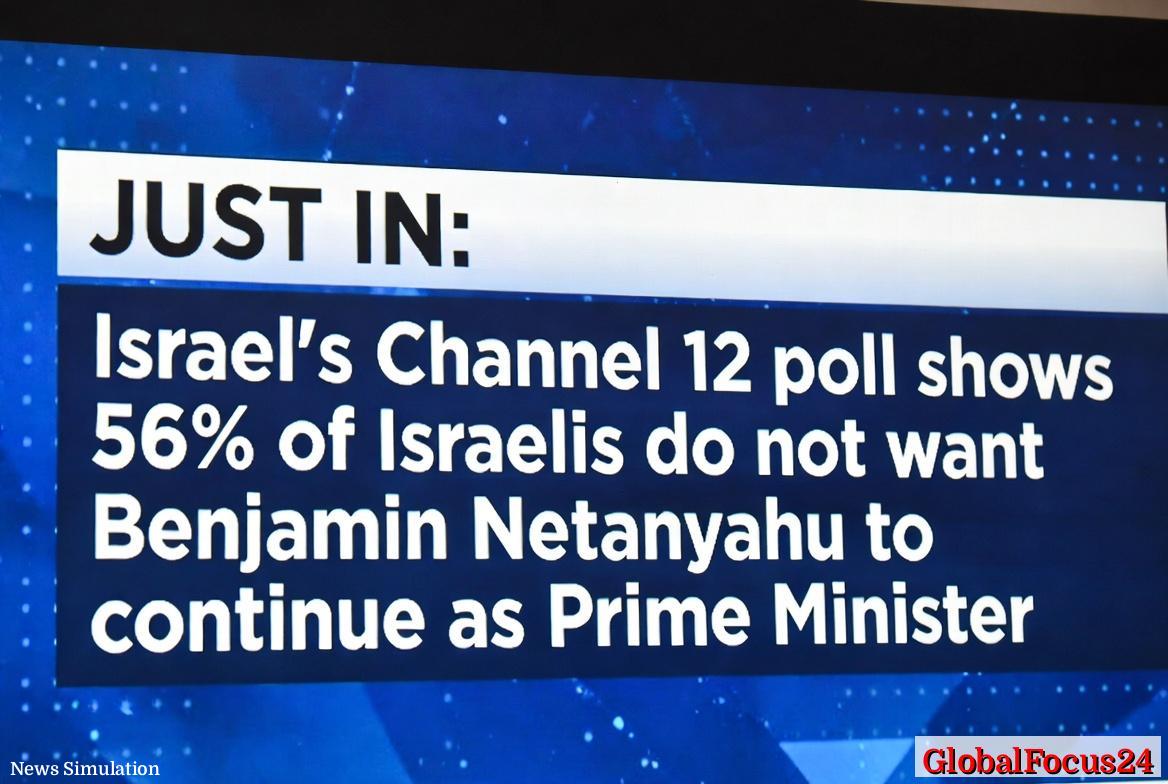
A newly released public opinion poll indicates that 56% of Israelis do not want Benjamin Netanyahu to continue serving as prime minister, reflecting a notable shift in domestic sentiment during a period marked by political uncertainty, security concerns, and economic pressures. The findings underscore growing divisions within Israeli society and suggest a potential turning point in the country’s political landscape.
The survey, conducted by a reputable national polling organization, shows that a majority of respondents favor a change in leadership, while a smaller portion continues to support Netanyahu’s tenure. The results come at a time when Israel is navigating multiple internal and external challenges, including ongoing regional tensions and debates over governance and institutional reforms.
Historical Context of Netanyahu’s Leadership
Benjamin Netanyahu is one of Israel’s longest-serving leaders, having held office for multiple terms since the late 1990s. His political career has been defined by a focus on national security, economic liberalization, and strong international diplomacy, particularly with Western allies and emerging regional partners.
Over the years, Netanyahu has overseen periods of economic growth and technological expansion, with Israel earning recognition as a global hub for innovation and startups. However, his leadership has also been accompanied by political polarization, repeated election cycles, and legal controversies that have shaped public perception.
Israel’s parliamentary system has contributed to this dynamic. Coalition governments are the norm, often requiring alliances among diverse political parties. This structure can amplify political instability, particularly when public opinion becomes fragmented.
Key Factors Influencing Public Opinion
Several factors appear to be influencing the current decline in support for Netanyahu:
- Ongoing security concerns, including conflicts and regional instability, which have placed sustained pressure on national leadership.
- Economic challenges, such as rising living costs and housing affordability issues, affecting middle- and lower-income households.
- Political fatigue after years of repeated elections and coalition negotiations.
- Public debate over judicial and institutional reforms, which has prompted widespread demonstrations and civic engagement.
The poll suggests that dissatisfaction is not confined to a single demographic group. Instead, it spans various age brackets, regions, and socioeconomic backgrounds, indicating a broad-based reassessment of leadership preferences.
Economic Implications of Political Uncertainty
Political stability is a key factor influencing investor confidence and economic performance. Israel’s economy, while resilient, is closely tied to global markets, foreign investment, and its high-tech sector.
Periods of political uncertainty can lead to fluctuations in currency valuation, shifts in capital flows, and cautious business sentiment. Analysts note that prolonged leadership disputes or policy uncertainty may impact:
- Foreign direct investment, particularly in technology and infrastructure sectors.
- Consumer confidence and domestic spending patterns.
- Long-term economic planning and fiscal policy implementation.
Despite these concerns, Israel’s diversified economy and strong institutional framework have historically helped mitigate the effects of political turbulence. However, sustained public dissatisfaction with leadership could influence policy direction and economic priorities in the coming years.
Regional Comparisons and Political Trends
Israel’s current political climate mirrors broader trends observed in other democratic nations, where public trust in long-serving leaders can fluctuate amid changing economic and social conditions.
In several European countries, for example, incumbents have faced declining approval ratings following periods of economic strain or contentious policy reforms. Similarly, in parts of Asia and Latin America, voter sentiment has shifted toward calls for political renewal and greater accountability.
What distinguishes Israel’s situation is the combination of its unique security environment and its proportional representation system, which can intensify political fragmentation. Unlike presidential systems, where leadership changes occur at fixed intervals, Israel’s parliamentary framework allows for more frequent shifts in government, often driven by coalition dynamics.
Public Reaction and Civic Engagement
The poll results have sparked discussion across Israeli society, from urban centers like Tel Aviv and Jerusalem to smaller communities throughout the country. Public discourse has been shaped by a mix of concern, debate, and calls for dialogue.
In recent months, large-scale demonstrations have highlighted the level of civic engagement among Israeli citizens. These gatherings have brought together individuals with diverse viewpoints, reflecting both support for and opposition to current leadership and policy directions.
Social media platforms and public forums have also played a significant role in amplifying voices and shaping narratives סביב governance, accountability, and national priorities. This heightened level of engagement suggests that the issue of leadership is likely to remain central in upcoming political developments.
Implications for Future Elections
While the poll does not directly determine electoral outcomes, it offers insight into potential trends that could influence future voting behavior. Political analysts note that shifts in public opinion can affect party strategies, coalition negotiations, and candidate positioning.
If the current sentiment persists, it may lead to:
- Increased competition among political parties seeking to present alternative leadership options.
- Realignment within existing coalitions or the formation of new alliances.
- Greater emphasis on policy issues that resonate with voters, such as economic stability and governance reforms.
Israel’s electoral history demonstrates that public opinion can evolve rapidly, particularly in response to major events or policy decisions. As a result, polling data is often viewed as a snapshot rather than a definitive predictor.
Broader Context of Leadership Transitions
Leadership transitions are a common feature in democratic systems, often reflecting changing public expectations and priorities. In Israel, such transitions have historically been shaped by a combination of electoral outcomes, coalition agreements, and internal party dynamics.
Netanyahu’s long tenure has made him a central figure in Israeli politics, both domestically and internationally. Any potential shift in leadership would likely have implications for Israel’s diplomatic relationships, economic policies, and strategic direction.
At the same time, the country’s institutional framework ensures continuity in governance, regardless of individual leadership changes. This stability is a key factor in maintaining investor confidence and international partnerships.
Outlook for Israeli Politics
The poll indicating that 56% of Israelis do not want Netanyahu to continue as prime minister highlights a moment of reflection within the country’s political landscape. It points to evolving public expectations and the potential for change in leadership dynamics.
As Israel continues to navigate complex domestic and regional challenges, the interplay between public opinion, political strategy, and institutional processes will shape the path forward. Observers will be closely watching how these factors influence decision-making in the months ahead, particularly as discussions حول elections and governance intensify.
The coming period is likely to be marked by continued debate, strategic positioning among political actors, and sustained public engagement. Whether this translates into a leadership transition or a reaffirmation of the current government will depend on how these dynamics unfold within Israel’s democratic framework.