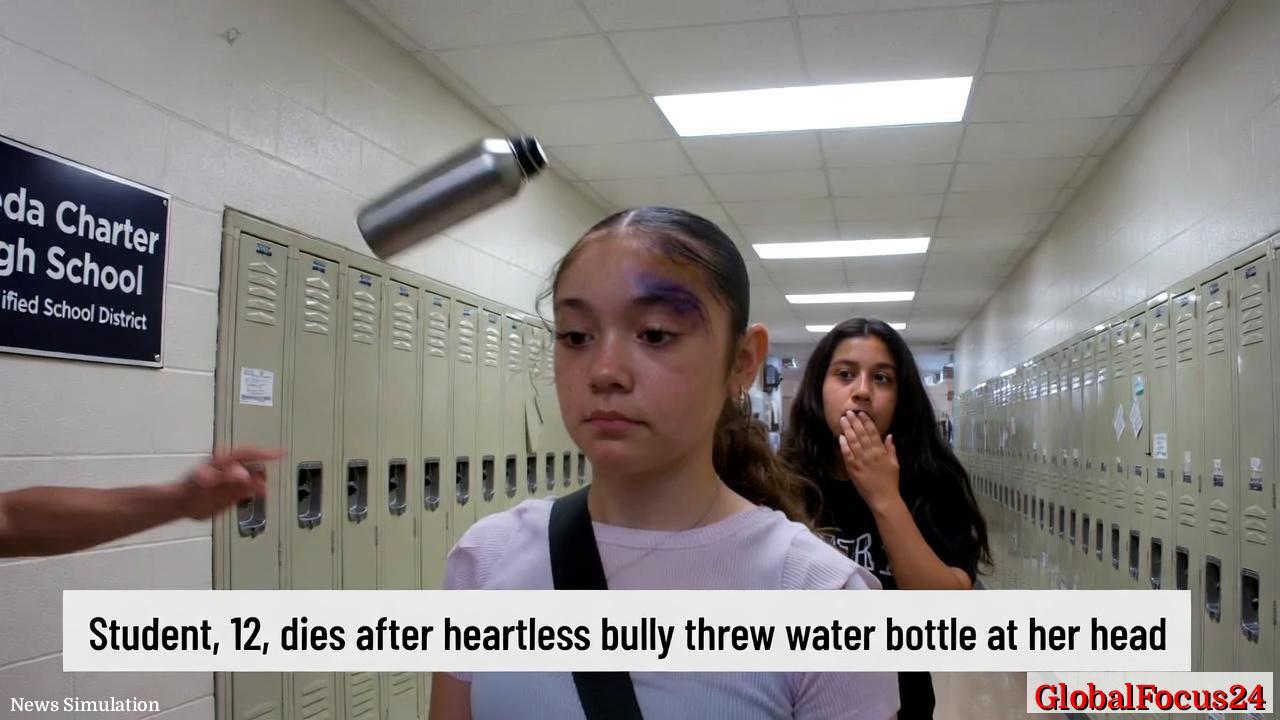
12-Year-Old Girl Dies After Bully Throws Water Bottle at Her Head in Los Angeles School Hallway
A Tragic Incident in a School Corridor
A 12-year-old girl, Khimberly Zavaleta Chuquipa, has died after being struck in the head by a metal water bottle thrown by another student inside Reseda Charter High School in Los Angeles. The incident, which occurred on February 17, has sparked an outpouring of grief, outrage, and renewed scrutiny of bullying in schools across Southern California.
Police confirmed they are investigating the death as a potential homicide, stressing that the case involves minors and therefore requires careful handling. The Los Angeles Unified School District (LAUSD) expressed its condolences while declining to provide specific information, citing student confidentiality.
The events have deeply shaken the community and raised questions about the effectiveness of anti-bullying protocols and supervision in schools, especially in a district that serves hundreds of thousands of students.
The Sequence of Events
According to the family, Khimberly was in the hallway when a confrontation broke out involving her sister and another student. Trying to defend her sibling, she stepped in just as a metal water bottle was thrown. The impact struck her in the head, causing visible pain but not immediate panic. Staff reportedly treated her at the school before she was sent to a hospital for evaluation. Doctors at that time released her, determining that her condition did not appear severe.
However, several days later, Khimberly developed a persistent headache that worsened rapidly. On February 24, she collapsed at home and was rushed to UCLA Children’s Hospital. Physicians discovered a brain hemorrhage and ruptured blood vessels attributed to the impact from the bottle. Despite emergency surgery and efforts to reduce brain swelling, she was declared dead around 3:30 a.m. on February 25.
Her mother, Elma Chuquipa, described the moment as unimaginable, saying the family’s youngest child was “the light of our home” who loved volleyball, music, and taking walks with her dogs.
The School and Police Response
The Los Angeles Police Department has opened a homicide investigation, working closely with LAUSD officials. Detectives have not released the identities of the students involved due to their age but confirmed that witness statements and school security footage are being reviewed.
LAUSD, the nation’s second-largest public school district, issued a statement expressing deep sorrow and promising resources for affected students and staff at Reseda Charter High School. Counselors and crisis response teams were deployed to the campus, which has remained under heightened supervision since the tragedy.
District representatives emphasized their commitment to student safety but did not elaborate on whether disciplinary or procedural action has been taken against those involved.
Grief and Outcry from the Community
As news of Khimberly’s death spread, students and parents gathered outside the school to hold a vigil. Candles flickered beneath hand-drawn posters demanding justice and accountability. Friends described her as “joyful and kind” and called for answers about how such an incident could have escalated so quickly on school grounds.
One of her classmates, Dayari Diaz, said, “We want justice for Khimberly. The school is not doing enough.” Others voiced frustration over what they perceive as a pattern of underreporting and insufficient responses to bullying.
The memorials have since grown into a broader call for change. Community members have begun organizing meetings to address student safety and to push for more transparent bullying prevention measures.
Bullying and Youth Violence in Context
Bullying remains one of the most persistent challenges in U.S. schools. According to data from the federal Centers for Disease Control and Prevention, approximately one in five students nationwide report being bullied on campus each year. In California, surveys show that middle school students face higher rates of physical bullying than older age groups, often due to social hierarchies and limited conflict intervention strategies.
Historically, Los Angeles Unified has grappled with incidents of campus violence. Over the past decade, the district has implemented initiatives including peer mentorship programs, anti-bullying workshops, and digital safety monitoring. Despite these measures, incidents tied to bullying, both physical and cyber, have continued to occur.
This tragedy at Reseda Charter High School echoes several recent national cases in which children died following altercations initially deemed minor. The similarity in patterns—initially underestimated injuries that later proved fatal—has led education experts to urge greater awareness of traumatic brain injuries in school settings.
Medical and Legal Implications
From a medical perspective, Khimberly’s case highlights the delayed but devastating consequences of head trauma in minors. Neurologists note that even mild concussions can result in dangerous internal bleeding or vessel rupture if left unchecked. Pediatric emergency physicians stress that any child hit in the head—especially by a hard object—should be monitored closely for several days for signs of pain, nausea, or dizziness.
Legally, juvenile assault cases that result in death fall under complex jurisdiction. In California, juvenile defendants cannot be tried as adults until the age of 16, but serious offenses may still carry long-term consequences, including involuntary manslaughter charges or mandated rehabilitation programs.
The Los Angeles County District Attorney’s Office typically reviews such cases after police complete their investigation. Prosecutors must determine whether criminal intent existed or if the death was the tragic outcome of reckless behavior.
Historical Parallels in Student Safety Reform
California has faced several turning points in student safety reform following fatal incidents. The 1999 death of a Long Beach student after a fight prompted statewide mandates for clearer reporting of school violence. In the 2010s, the rise of social media harassment led to legislation requiring districts to address cyberbullying.
Khimberly’s death could mark another inflection point, emphasizing the need to reassess what constitutes physical danger in school settings. Experts are calling for stronger supervision during transition periods between classes—often when bullying occurs in hallways, cafeterias, or stairwells—and for immediate medical evaluation after any head injury, regardless of perceived severity.
Some local educators argue for installing more cameras and empowering students to anonymously report aggressive behavior. Others emphasize early intervention through counseling and empathy programs that teach children how to manage conflict constructively.
Emotional and Economic Impact on the Community
Beyond the grief, Khimberly’s death has placed emotional and financial strain on her family and community. Neighbors and relatives have organized online fundraisers to help cover funeral expenses and medical bills from her hospital stay.
Economically, incidents like these can affect school attendance, community trust, and district resources. When tragedies occur, schools often redirect funds toward crisis response rather than long-term programs. Local mental health organizations report a surge in counseling requests, reflecting both mourning and parental fears about safety on campus.
Sociologists note that such events can have ripple effects across neighborhoods, diminishing a community’s sense of stability and increasing anxiety among younger students. For many families in the San Fernando Valley, public schools serve not only as educational centers but as anchors of social life. The breakdown of perceived safety within them can reshape how residents engage with local institutions.
A Push for Accountability and Healing
While the investigation continues, Khimberly’s name has become a rallying point for advocates demanding change. Calls for a “Khimberly’s Law” have begun circulating online—an informal proposal encouraging mandatory medical evaluations after school altercations and stricter supervision of common areas.
Whether formal legislation emerges or not, the emotional momentum surrounding the tragedy underscores a deep public desire for reform. Parents and activists aim to ensure that stricter protections for children follow this loss, not just condolences.
As the Chuquipa family prepares for memorial services, their pain has resonated far beyond Reseda. To many, Khimberly represents both the fragility of youth and the urgent need for safer learning environments.
Her mother’s words carry the weight of countless families fearful of similar loss: “No parent should ever have to bury their child because of something that happened at school.”
The ongoing investigation will determine legal responsibility, but the community’s search for meaning—and for change—has already begun.