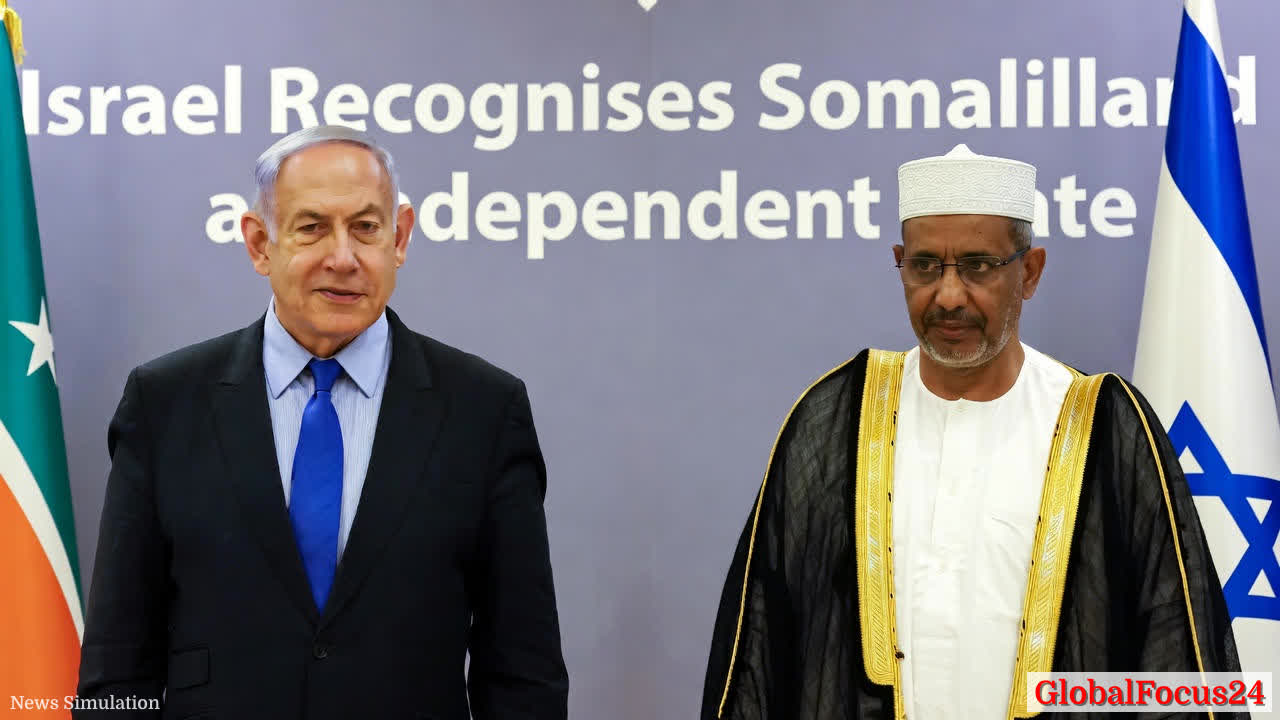
Israel’s Recognition of Somaliland: A New Chapter in Africa-Middle East Diplomacy
In a move that redefines regional chessboards and tests long-standing assumptions about sovereignty, Israel has formally recognized Somaliland as an independent state. The announcement, delivered by Prime Minister Benjamin Netanyahu, marks the first time an international actor has extended recognition to the self-declared republic since it proclaimed independence from Somalia in 1991. The decision accelerates a shift in diplomatic dynamics across the Horn of Africa and the broader Middle East, with potential ripple effects across trade, security, and regional alignments.
Historical Context: Somaliland’s Uneasy Path to Statehood
Somaliland’s bid for independence is rooted in a distinct political, social, and economic trajectory. After a brutal civil conflict that followed Siad Barre’s downfall, Somaliland established a provisional administration in 1991, choosing to build its own government institutions, currency, and policing structures while remaining internationally fragmentary—recognized by few states and lodged in a gray area of statehood. For decades, Somaliland has functioned with robust domestic governance, enduring economic growth driven by livestock, remittances, and, more recently, a nascent diversification into services and small industries. Yet its lack of full international recognition has limited access to formal capital markets, maritime revenue opportunities, and multilateral assistance that many peers take for granted.
Somaliland’s capital, Hargeisa, and other urban centers have developed a functional bureaucracy and infrastructure projects funded by diaspora communities and modest foreign investment. The region’s strategic location along the Gulf of Aden—near busy shipping lanes linking Europe, Asia, and the Red Sea—has historically given it operational value in maritime trade and security cooperation. The 1991 declaration, reinforced by local constitutional processes and ongoing public support in domestic polls, has long fostered a sense of national identity that Somaliland sees as compatible with a modern, rules-based international order.
The News of Recognition: Israel’s Calculated Move
Israel’s decision to recognize Somaliland is anchored in a broader strategic calculus shaped by two tracks: regional normalization and diversification of diplomatic partners. Since the Abraham Accords of 2020, Israel has pursued deeper ties with Gulf states, North African economies, and select sub-Saharan players. The Somaliland move aligns with a strategy to cultivate alliances with governance-tested regions that demonstrate administrative capacity, relatively stable security environments, and potential for mutually beneficial partnerships in agriculture, health, technology, and logistics.
Prime Minister Netanyahu’s communications emphasize practical collaboration in three core areas:
- Agriculture: Somaliland’s climate and arable potential present opportunities for irrigation efficiency, modern farming techniques, and crop diversification. Israel’s expertise in agricultural technology—drip irrigation, water recycling, soil sensors, and farming analytics—could translate into measurable gains in yields and water stewardship for Somaliland’s pastoral and agricultural sectors.
- Health: A formalized relationship enables the transfer of medical knowledge, pharmaceutical supply chains, and public health program implementation. Israel’s health-tech industry, telemedicine capabilities, and emergency response systems could support Somaliland’s healthcare delivery, disease surveillance, and maternal-child health initiatives.
- Technology: Israel’s strengths in cyber security, digital infrastructure, fintech, and research and development may help Somaliland advance its digital economy, e-government services, and small-to-medium enterprise ecosystems. Collaborative projects could include tech startups, incubators, and cross-border knowledge exchange with regional markets.
Diplomatic Repercussions: Immediate Reactions and Global Rebalancing
Reactions to the recognition have come quickly and with sharp contrasts. The Somaliland leadership framed the decision as a historic milestone that will accelerate regional stability and economic integration. They underscored the intention to join broader peace-building processes and to pursue partnerships that enhance prosperity and security across Africa and the broader Middle East.
However, the move has drawn explicit opposition from Somalia and several regional powers. Somalia’s government, along with Egypt, Turkey, and Djibouti, issued statements condemning the recognition, emphasizing adherence to territorial integrity and unity. They warned that recognizing autonomous or secessionist movements could set a dangerous precedent within international law and the United Nations Charter. The shared stance among these countries reflects concerns about the potential destabilization of existing state boundaries and the risks to ongoing regional security architectures in the Horn of Africa and the Red Sea theater.
In parallel, other international actors may weigh the decision against broader foreign policy objectives. Some states could view Somaliland’s recognition as an opportunity to bolster economic partners and diversified supply chains, while others may hesitate due to concerns about sovereignty norms, bilateral leverage, and the impact on multinational diplomatic streams. The United States, European Union members, and regional blocs will likely monitor subsequent steps, including embassies, ambassadorial postings, and legal frameworks for cross-border trade and investment.
Economic Implications: Trade, Investment, and Market Access
From an economic standpoint, Somaliland’s new diplomatic status could unlock access to capital, development finance, and international trade agreements that have long bypassed it due to its lack of formal recognition. Several potential channels stand out:
- Trade facilitation and logistics: Formal recognition by Israel, alongside Somaliland’s existing port-access ambitions, could spur new logistics corridors, warehousing facilities, and customs cooperation agreements. This could improve import-export efficiency and attract regional manufacturing clusters seeking secure, rule-based routes through the Gulf of Aden.
- Investment flows: Recognized status often reduces perceived risk for foreign investors. For Somaliland, this could translate into increased deposits, bonds, or development financing aimed at infrastructure, agriculture, and energy sectors. Israel’s high-tech investor ecosystem, paired with Somaliland’s governance capabilities, could catalyze joint ventures in agtech, fintech, and water technology.
- Financial services: A visible political upgrade can encourage banks and microfinance institutions to extend services to a broader clientele, including expatriate communities and regional partners. This can stimulate formal financial inclusion and risk management tools tailored to small businesses and farmers.
- Human capital and knowledge transfer: Health-tech and agricultural innovation exchange programs can transfer know-how and training to local workforces, spurring job creation and skills development. Diaspora networks often play a pivotal role in financing and knowledge transfer, potentially amplifying the impact of formal recognition.
Regional Comparisons: Somaliland in Context
The Somaliland episode invites comparisons with similarly situated regions seeking greater diplomatic recognition while maintaining domestic legitimacy and stability. Across Africa and the wider region, several entities have pursued recognition through a mix of internal governance strength and external partnerships. A few relevant reference points include:
- Puntland and other Somali regional authorities: While Puntland operates with its own administrative structures and security arrangements within Somalia, it remains unrecognized as an independent state. The Somaliland case highlights how distinct governance capacity can coexist with contested sovereignty in the international arena.
- De facto states in Africa and beyond: Regions like Northern Cyprus, Abkhazia, and Transnistria demonstrate that partial recognition can unlock some economic and political benefits, though full international acceptance remains a complex, often protracted process shaped by geopolitical currents and the attitudes of major powers.
- Gulf and Red Sea littoral dynamics: Somaliland’s position along the Gulf of Aden places it in a critical maritime corridor, underscoring why regional players are attentive to any shift in recognition status. Broader regional alignments may be influenced by how states balance security commitments, trade interests, and diplomatic signaling.
Implications for Security and Stability
Security considerations loom large in the wake of recognition. Somaliland’s existing security apparatus and relative stability could become a magnet for greater international security assistance and intelligence-sharing arrangements. A formal relationship with Israel may also influence security partnerships, including counterterrorism cooperation, border control, and shipping lane protection. Conversely, Somalia’s concerns about territorial integrity—rooted in a broader regional wariness about secessionist movements—highlight the fragile balance that regional actors must maintain to avoid tipping into wider conflict.
Public sentiment, both within Somaliland and across neighboring states, will shape the durability of this new recognition. In Somaliland, a sense of national identity and practical governance achievements fuels support for stronger international ties. In neighboring Somaliland-adjacent areas, public opinion may be more wary of secessionist movements, underscoring the delicate nature of any unilateral diplomatic shifts that alter the status quo.
Legal and Diplomatic Pathways: What Comes Next
Several concrete steps typically accompany formal recognition at this stage:
- Diplomatic missions: The opening of embassies and the appointment of ambassadors would signal a deepening of bilateral ties. Consular services and cultural exchange programs would follow to build people-to-people connections.
- Legal frameworks: Bilateral treaties on trade, investment protection, intellectual property, and air and maritime transport would lay the groundwork for stable cooperation. Courts and arbitration mechanisms might be established to resolve disputes and facilitate cross-border commerce.
- Sector-specific programs: Joint ventures in agriculture, water management, and health systems could be prioritized. Technology transfer agreements, startup accelerators, and joint research initiatives would push Somaliland’s development agenda forward while leveraging Israel’s innovation ecosystem.
- Multilateral engagement: Somaliland’s recognition could invite engagement with regional organizations and potentially align with broader economic communities seeking to expand their influence in the Red Sea corridor, the Horn of Africa, and adjacent maritime routes.
Public Reception and Social Dimensions
Public reaction to the recognition is likely to be mixed, reflecting broader regional and international tensions around sovereignty, legitimacy, and economic opportunity. In Somaliland, supporters may celebrate a validated status that could translate into greater autonomy in international forums and increased confidence in pursuing development projects. Critics within the region might warn against overreliance on a single external power or the risk of marginalizing other legitimate voices in Somali politics.
From a humanitarian perspective, increased international engagement could bring relief through improved healthcare access, education initiatives, and humanitarian logistics coordination. Yet there is a need for careful management to ensure that aid and investment projects are inclusive, transparent, and aligned with local development priorities.
Global Economic Context: A Time of Shifting Alliances
The international landscape is undergoing significant recalibrations, with many countries reassessing their diplomatic portfolios in response to changing economic and geopolitical realities. The Somaliland recognition by Israel, if sustained, could accelerate a broader trend toward selective normalization with states that demonstrate stable governance, strategic geographic placement, and a readiness to integrate with global value chains. In this context, Somaliland’s strategy may involve balancing relationships with traditional partners like Somalia, Ethiopia, and Djibouti while leveraging new ties to diversify its international support base.
Expert assessments suggest that the long-term impact will depend on the follow-through of concrete agreements that translate into real-world economic activity. Logistics improvements, investment flows, and technology collaborations will be the most visible indicators of success or failure in the coming years. International observers will also monitor how this development influences regional security arrangements, maritime governance in the Gulf of Aden, and the stability of neighboring states facing their own governance challenges.
Conclusion: A Pivot Point with Broad Implications
The formal recognition of Somaliland by Israel marks a watershed moment in the ongoing evolution of Africa-Middle East diplomacy. It signals a willingness among international actors to engage with a governance entity that has demonstrated capacity in administration and development, even as its sovereignty remains contested in the broader international system. The immediate economic and operational implications—ranging from enhanced trade and investment to intensified agricultural and health collaboration—offer Somaliland a pathway to greater integration into global markets. For Israel, the move broadens its diplomatic footprint and reinforces its strategic partnerships in key maritime regions and emerging markets.
As Somaliland steps onto the world stage with this new recognition, the global community will watch not only the bilateral outcomes but also the broader consequences for regional stability, international law, and the evolving architecture of statehood in a rapidly changing world. The coming years will reveal whether this moment becomes a durable catalyst for prosperity and peace or a milestone in a longer, more complex journey toward comprehensive regional consensus.