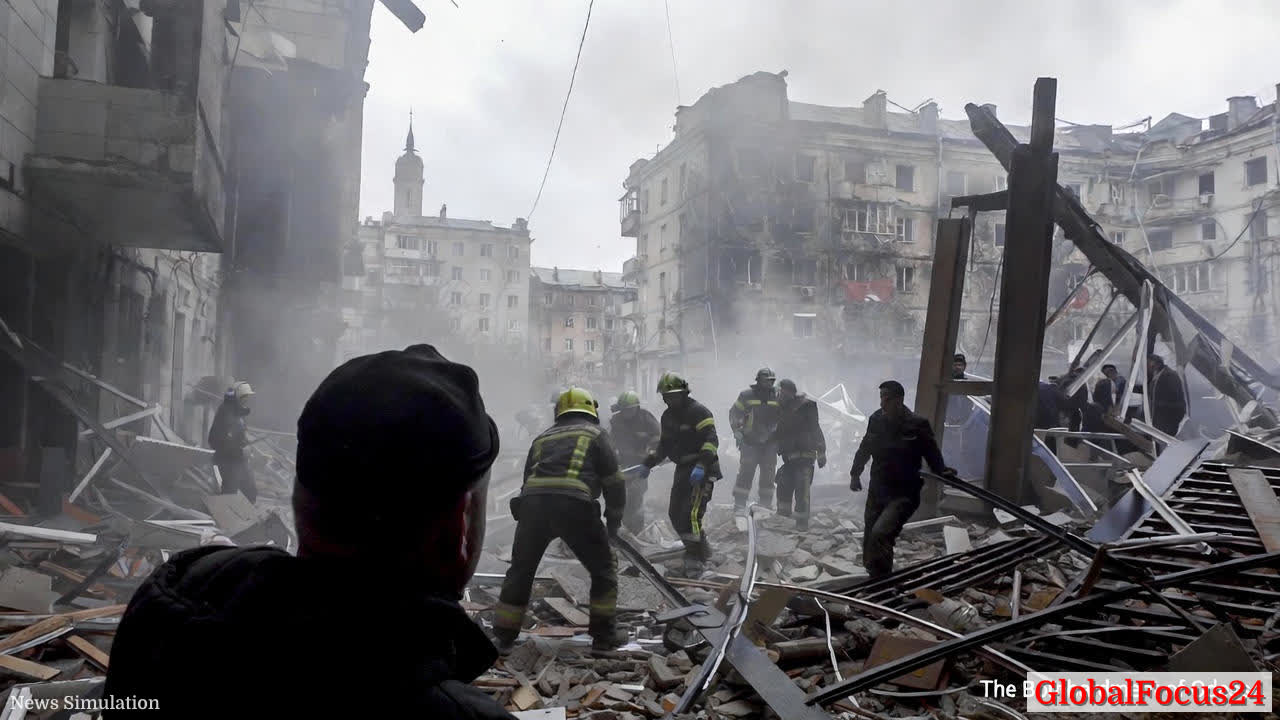
Black Sea Blitz: Why Odessa Remains a Focal Point in Ukraine’s Economic and Strategic Landscape
Odessa stands at a crucial crossroads of history, commerce, and regional security. As Ukraine’s southern gateway to the Black Sea, the city has long served as a keystone for export-oriented industries, maritime logistics, and cultural exchange. In recent months, escalating bombardments have rekindled memories of past sieges while underscoring new vulnerabilities in a region already strained by conflict. This article examines the historical context, the economic implications, and the comparative dynamics that shape Odessa’s role in the broader security and economic architecture of the Black Sea basin.
Historical Context and Strategic Significance
Odessa’s origins trace to the late 18th century, when the Russian Empire established a warm-water port that would grow into a cosmopolitan hub bridging Europe and Asia. Its architectural ensembles, diverse neighborhoods, and bustling port activity reflect centuries of layered influences, from Ottoman to Austro-Habsburg to Soviet legacies. The city’s port facilities—handling both bulk cargo and containerized goods—have been a catalyst for regional trade, attracting investors and traders who rely on the shortest viable routes to international markets.
During the 20th century, Odessa stood at the confluence of shifting alliances and geopolitical ambitions. Its proximity to the Danube, the Mediterranean, and major energy corridors made it a focal point for maritime transport and logistics. In peacetime, the city’s maritime services—stevedoring, ship repair, warehousing, and customs processing—functioned as a vital artery in Ukraine’s economy, complementing road and rail networks that connect the interior with global supply chains. Even amid conflict, Odessa’s role as a logistics node has persisted, underscoring its resilience and strategic value.
Economic Importance and Dependence on Maritime Trade
Odessa’s economy is deeply tied to its port activities, which enable export diversification for Ukraine’s agricultural and industrial sectors. Grain, sunflower oil, and other agricultural commodities benefit from Odessa’s access to multimodal routes that connect hinterland production with international buyers. In the manufacturing sphere, light industries, food processing, and logistics services contribute to urban employment and regional development. A sizable portion of regional revenue stems from port-related activities, including shipping, storage, and related services, making the city a bellwether for Ukraine’s export performance.
The bombardment of Odessa exacerbates vulnerabilities within supply chains that rely on uninterrupted maritime access. Damage to port infrastructure, quays, and adjacent logistics facilities can ripple through the economy, affecting export readiness, insurance premiums, and the availability of critical goods in domestic markets. While Ukraine and its international partners have historically sought to diversify routes and reduce exposure to single choke points, Odessa’s role as a gateway to global markets remains irreplaceable in the short to medium term.
Regional Comparisons: Black Sea Ports and Competitors
To understand Odessa’s position, it is instructive to compare it with other major Black Sea ports. Varna in Bulgaria, Constanța in Romania, and Sevastopol (historically a major hub, now contested) illustrate a spectrum of strategic importance, infrastructure maturity, and access to international shipping lanes. Constanța and Varna have invested in ice-free year-round access, modern container terminals, and diversified hinterland connections, enabling them to compete for transshipment traffic and regional trade flows. Odessa, by contrast, benefits from a longer historical track record, a broad network of connections to Ukrainian interior markets, and a well-established reputation as a trade-focused city with strong industrial and logistics clusters.
The current dynamic is shaped by security concerns, international sanctions regimes, and the evolving landscape of energy transport in the Black Sea. While some ports may experience short-term disruptions due to conflict, others could attract seasonal or long-haul shipments as operators adjust routes to minimize risk. The resilience of Odessa’s port—through rapid stabilization of damaged berths, rehabilitation of critical equipment, and swift restoration of hinterland connectivity—will influence not only regional trade patterns but also investor confidence in Ukraine’s export infrastructure.
Infrastructure, Recovery, and Human Impact
Damage assessments from recent hostilities indicate harm to port facilities, cargo handling equipment, and adjacent infrastructure. Recovery timelines depend on several factors, including security conditions, availability of funding for reconstruction, and the efficiency of rehabilitation programs coordinated by Ukrainian authorities with international partners. The human dimension of ongoing conflict is a constant undertone: workers, drivers, engineers, and emergency responders continue to operate under difficult conditions to prevent further deterioration of living standards and to maintain essential supply lines for urban populations and rural suppliers alike.
Efforts to restore functionality often prioritize critical berths, fuel supplies, and the continuity of customs and border processes. International support, through conditional aid and technical assistance, can accelerate restoration-work while ensuring compliance with safety and environmental standards. In the interim, alternative logistics corridors—rail, inland waterways, or northern routes—may shoulder portions of trade while port facilities undergo rehabilitation. The ability to maintain steady export flows, especially for agricultural commodities, remains a decisive factor in sustaining Ukraine’s economic resilience.
Energy and Economic Spillovers
The Black Sea region intersects with broader energy and commodity markets. Odessa’s port activity interacts with energy shipping, including crude and refined products, as well as the transport of bulk commodities that underpin manufacturing value chains. Disruptions in Odessa can ripple through pricing dynamics and insurance costs, affecting not only Ukrainian exporters but regional importers as well. In a wider context, the security of maritime trade lanes feeds into Europe’s energy diversification strategy and the resilience of food supply chains, given Ukraine’s role as a major global supplier of grain and other critical commodities.
Public sentiment and investor perception are sensitive to news of renewed bombardments. Even when direct military gains appear limited, the psychological and economic effects can be substantial. Local businesses may face increased operating costs, heightened risk premiums, and longer lead times, while international buyers watch for indicators of stability that could influence long-term contract terms and port-centric investment plans.
Historical and Contemporary Risks: Lessons for Policy and Planning
Historical experience shows that urban port cities frequently absorb shocks from regional conflict, yet they also possess adaptive capacities that can sustain economic activity. The resilience of Odessa depends on a combination of robust crisis management, diversified transport routes, and international cooperation on security and infrastructure rebuilding. Lessons from past conflicts emphasize the importance of maintaining essential services, protecting civilian populations, and prioritizing rapid repair and continuity of trade flows to prevent economic contraction from becoming a protracted downturn.
Policy responses that could bolster Odessa’s resilience include:
- Accelerating port rehabilitation with transparent project timelines, cost control, and stringent safety standards.
- Strengthening inland connections to reduce bottlenecks at the port and widen alternative routes for exporters.
- Enhancing insurance frameworks and risk assessment practices to reflect evolving maritime threats and geopolitical uncertainties.
- Coordinating with international partners to secure funding for critical infrastructure and to support humanitarian relief operations that stabilize local communities.
- Promoting regional commerce initiatives that diversify client bases and reduce reliance on a single port for strategic exports.
Public Response and Community Resilience
Public reaction to ongoing shelling and disruption of daily life in Odessa reflects the broader mood across regions affected by conflict. Citizens often mobilize through community organizations, volunteer groups, and local institutions to provide food, shelter, and essential services to those in need. The city’s cultural life—historic theatres, markets, and waterfront promenades—also serves as a symbol of continuity, even as security threats persist. Community resilience revolves around a collective commitment to preserve livelihoods, protect vulnerable populations, and sustain the social fabric that underpins economic recovery.
Regional Outlook and Long-Term Implications
Looking ahead, the trajectory of Odessa’s role in Ukraine’s economy will depend on several converging factors. The pace of security stabilization, the effectiveness of international aid for reconstruction, and the capacity of Ukraine to integrate its port infrastructure with broader regional trade networks will shape the city’s longer-term prospects. If stable conditions and credible investment are maintained, Odessa could solidify its position as a key logistics hub in southeastern Europe, supporting not only Ukraine’s export-led growth but also regional commerce by offering reliable access to the Black Sea and beyond.
Conclusion
Odessa’s significance extends beyond its immediate strategic value. It embodies the intersection of history, trade, and regional security that characterizes the Black Sea basin. While bombardments threaten to disrupt the city’s port operations and ripple through Ukraine’s economy, the commitment of local authorities, international partners, and the broader global community to restoring and safeguarding critical infrastructure offers a path toward resilience. The outcome will influence not only Odessa’s future but also the stability of regional supply chains and the resilience of European trade in the face of ongoing geopolitical uncertainty.